Guadalupe Fur Seal
Arctocephalus townsendi
Learn More About Guadalupe Fur Seals
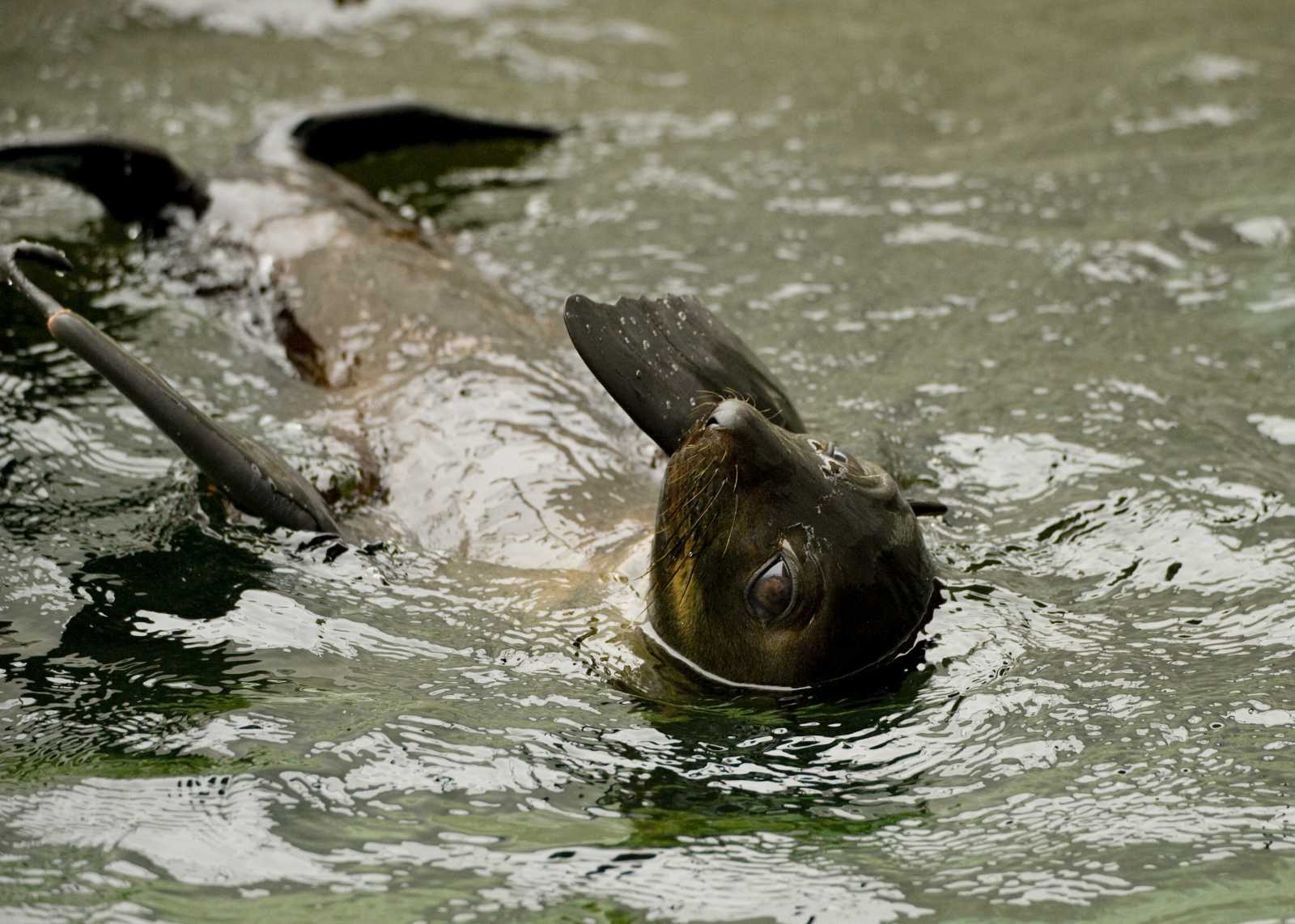
Little is known about Guadalupe fur seals because they are a pelagic species, meaning they spend most of their time in the open ocean. As a member of the otariid, or sea lion, family, these fur seals have long external ear flaps as well as large front flippers that allow them to walk on land.
Guadalupe fur seals are similar to northern fur seals in appearance but are slightly smaller and have a more elongated snout. Adult male Guadalupe fur seals also have a larger head and are lighter brown.
Males and females differ slightly in size, as males reach 6 feet and 300 pounds, while females grow to 4 feet and 100 pounds. By looks alone, juvenile Guadalupe fur seals are very difficult to tell apart from juvenile California sea lions and northern fur seals.
What do they sound like?
Meet Our Patient: Snaggle
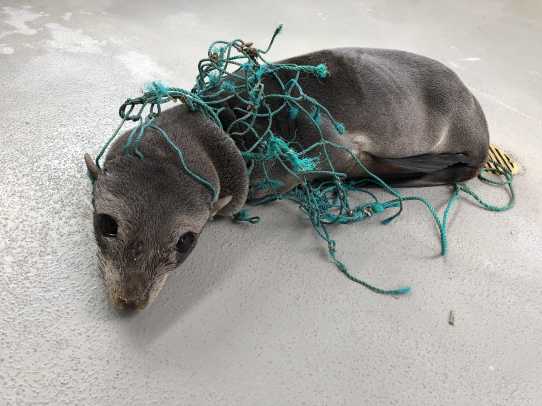
Guadalupe fur seal Snaggle was found with brightly colored netting wrapped tightly around his neck and body. He could barely open his mouth, so the entanglement likely left him unable to swim well enough to catch food. Weak and fatigued, he was on the brink of what would have been a devastating fate.
After our veterinarians removed his entanglement at our hospital, Snaggle recovered quickly from his wounds. After about three months of care, Snaggle was released back to his ocean home with a second chance at life.
photo © The Marine Mammal Center / NOAA permit #18786
The greatest threats to marine mammals are caused by people, but we can also be their greatest champions.
Sign up for email from The Marine Mammal Center to stay updated on how you can be an advocate and champion for marine mammals like Guadalupe fur seals.


Habitat & Population Status
Guadalupe fur seals were not identified as a distinct species until 1897, and by that time they were already extinct in California waters. Scientists did not know what a living Guadalupe fur seal looked like until 1928, when a few dozen fur seals were discovered on Guadalupe Island in Mexico, two of which were brought to the San Diego Zoo.
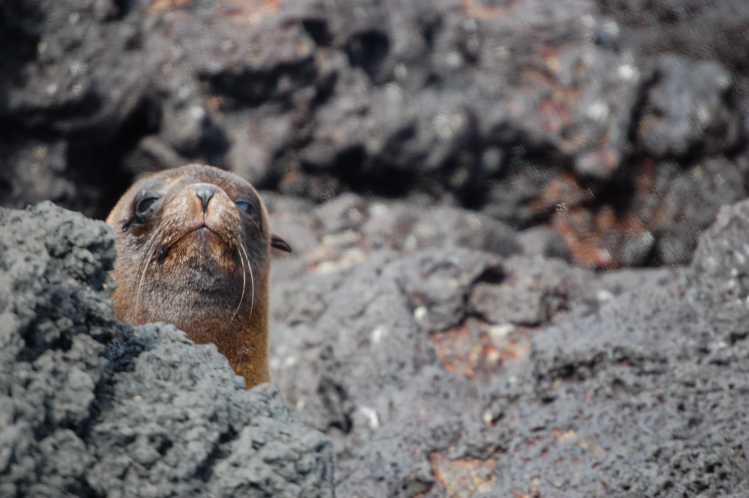
It’s now known that Guadalupe fur seals spend most of their time in the open ocean surrounding Guadalupe Island, the only known breeding colony, which has been slowly growing since the colony was reestablished in 1954.
These seals are increasingly seen farther north near Southern California on the Channel Islands, and in recent years several Guadalupe fur seals have stranded along the Central California coast. It is not yet known whether these strandings are a result of warmer water pushing their food northward or a sign of Guadalupe fur seals returning to their former California habitat.
The Guadalupe fur seal is listed as a threatened species, with a population estimated to be about 34,000 individuals. These fur seals are protected by law in the United States. And in Mexico, Guadalupe Island has been designated a pinniped (or seal and sea lion) sanctuary.
Guadalupe Fur Seal Research at The Marine Mammal Center
{"image":"\/Animals\/Patients\/Guadalupe fur seals\/2020\/cropped-images\/gfs-pippin-by-bill-hunnewell-c-the-marine-mammal-center-noaa-permit-18786-111-120-3738-2920-1602702191.jpg","alt":"Guadalupe fur seal Pippin","title":"Understanding the Impacts of Climate Change on Threatened Guadalupe Fur Seals","link_url":"https:\/\/www.marinemammalcenter.org\/publications\/understanding-the-impacts-of-climate-change-on-threatened-guadalupe-fur-seals","label":"Research Paper","type":"publication"}
Understanding the Impacts of Climate Change on Threatened Guadalupe Fur Seals
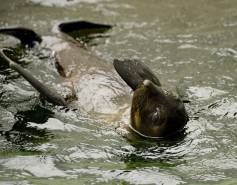
Read More{"image":"\/Animals\/Patients\/Guadalupe fur seals\/2018\/cropped-images\/gfs-snaggle-by-dana-angus-c-the-marine-mammal-center-noaa-permit-18786-0-4-3077-2404-1671839942.jpg","alt":"Guadalupe fur seal floating in the water","title":"The Northernmost and Westernmost Records of the Guadalupe Fur Seal","link_url":"https:\/\/www.marinemammalcenter.org\/publications\/the-northernmost-and-westernmost-records-of-the-guadalupe-fur-seal","label":"Research Paper","type":"publication"}
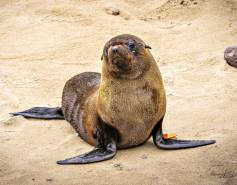
{"image":"\/Animals\/Patients\/Guadalupe fur seals\/2019\/cropped-images\/gfs-scooter-release-photo-c-steve-sayles-878-376-4402-3438-1606346089.jpg","alt":"Guadalupe fur seal","title":"Ecology and Conservation of Pinnipeds in Latin America: Guadalupe Fur Seal","link_url":"https:\/\/www.marinemammalcenter.org\/publications\/ecology-and-conservation-of-pinnipeds-in-latin-america-guadalupe-fur-seal","label":"Research Paper","type":"publication"}
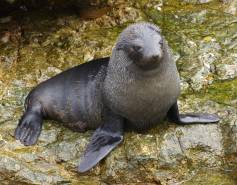
{"image":"\/Animals\/Wild\/Guadalupe fur seal\/cropped-images\/guadalupe-fur-seal-photo-c-marc-webber-113-2-3934-3072-1618437568.jpg","alt":"Guadalupe fur seal","title":"A New Guadalupe Fur Seal Colony in the Gulf of California?","link_url":"https:\/\/www.marinemammalcenter.org\/publications\/new-guadalupe-fur-seal-colony-in-the-gulf-of-california","label":"Research Paper","type":"publication"}
Breeding & Behavior
The breeding strategy of Guadalupe fur seals appears to be similar to that of northern fur seals and other types of sea lions in that males hold territories and breed with many females. Breeding has been observed to occur on the eastern side of Guadalupe Island in caves rather than on open beaches.
There is evidence that they once bred on the rocky beaches of Guadalupe Island, and some scientists speculate that hunting pressure pushed them back into caves for protection. There is also evidence that Guadalupe fur seals once bred as far north as Point Conception in central California.
Female Guadalupe fur seals typically give birth to their pups from mid-June to mid-July. The newborns weigh around 13 pounds at birth. Females nurse their pups for eight to 10 days, then leave to forage for food, returning to their pups every two to six days. After nine months on this cycle, pups wean from their mothers and are on their own.
Little is known about Guadalupe fur seal behavior or their diet, but they have been observed to eat squid, mackerel and lanternfish.


