Pacific Harbor Seal
Phoca vitulina richardii
Learn More About Harbor Seals
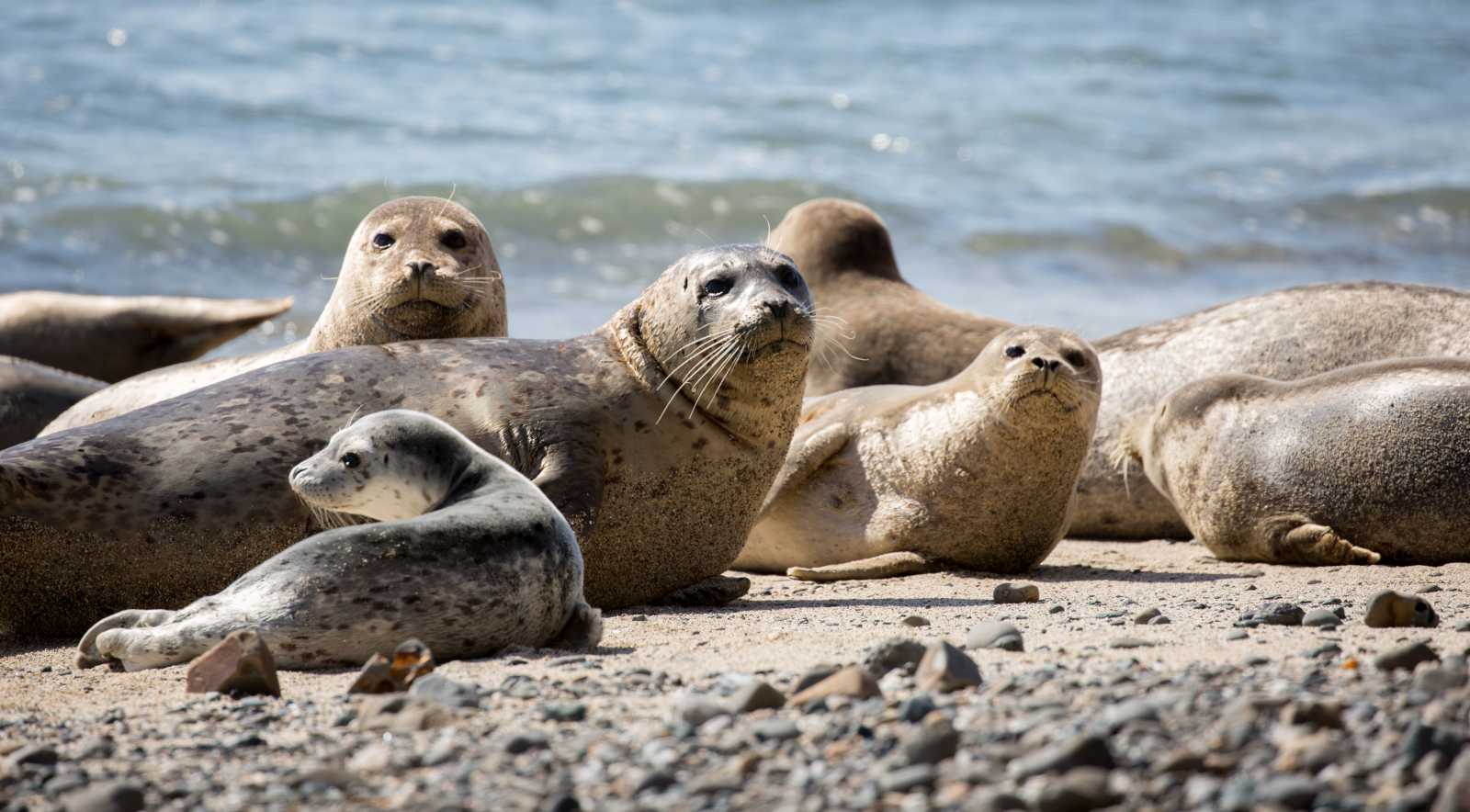
Pacific harbor seals have spotted coats in a variety of shades ranging from white or silver-gray to black or dark brown. Males are slightly larger than females, but on average harbor seals reach 5 to 6 feet in length and weigh up to 300 pounds.
As a true, or “crawling,” seal, harbor seals have ear holes and small flippers that help them move on land by flopping along on their bellies, also known as “galumphing.”
In San Francisco Bay, many harbor seals are fully or partially reddish in color. This may be caused by an accumulation of trace elements such as iron or selenium in the ocean or a change in the hair follicle.
What do they sound like?
Meet Our Patient: Bogey
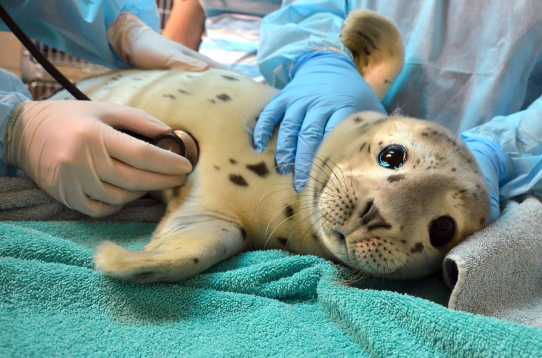
Pacific harbor seal pup Bogey was found alone just below the ninth hole of the famous Pebble Beach Golf Links. While it’s not certain how Bogey ended up alone, many harbor seal pups are orphaned due to humans or dogs getting too close and scaring the pup’s mother away.
Once at our hospital, Bogey was fed a nutritious fish-mash smoothie five times a day. It wasn’t long until he transitioned to eating whole fish and learning how to dive and catch them on his own—important skills Bogey would have learned from his mother in the wild. After months of care, Bogey was released back to his ocean home with other harbor seals his age.
The greatest threats to marine mammals are caused by people, but we can also be their greatest champions.
Sign up for email from The Marine Mammal Center to stay updated on how you can be an advocate and champion for marine mammals like harbor seals.


Habitat & Population Status
Pacific harbor seals are found north of the equator in both the Atlantic and Pacific oceans. In the Pacific, they can be found in areas ranging from Alaska to Baja California, Mexico. They favor nearshore coastal waters and are often seen on rocky islands, sandy beaches, mudflats, bays and estuaries.
The worldwide harbor seal population is estimated to be 500,000 individuals. In 2009, it was estimated that about 34,000 of them live in California.
Harbor Seal Research at The Marine Mammal Center
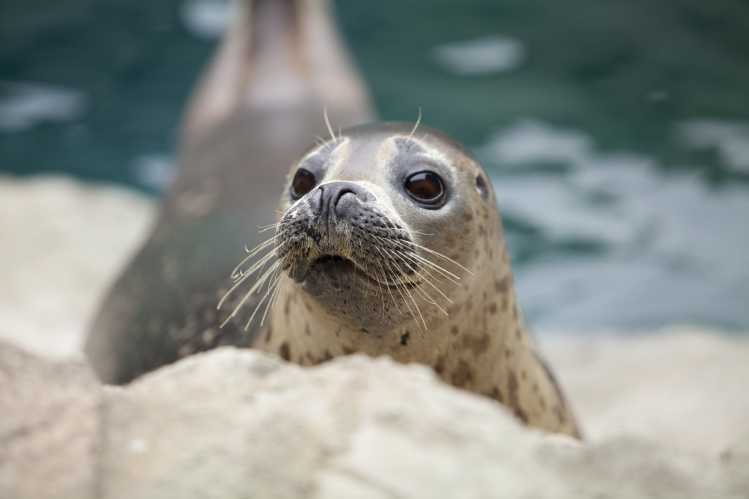
{"image":"\/Animals\/Patients\/Harbor seals\/hs-by-bill-hunnewell-c-the-marine-mammal-center-3.jpg","alt":"harbor seal pup","title":"Physiological Responses to Treating Malnutrition in Harbor Seal Pups","link_url":"https:\/\/www.marinemammalcenter.org\/publications\/physiological-responses-to-treating-malnutrition-in-harbor-seal-pups","label":"Research Paper","type":"publication"}
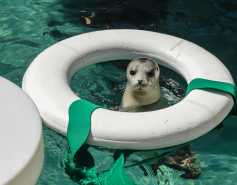
{"image":"\/Animals\/Patients\/Harbor seals\/hs-by-bill-hunnewell-c-the-marine-mammal-center.jpg","alt":"harbor seal in a life preserver enrichment item","title":"Enrichment as a Tool for Rehabilitating Harbor Seals","link_url":"https:\/\/www.marinemammalcenter.org\/publications\/enrichment-as-a-tool-for-rehabilitating-harbor-seals","label":"Research Paper","type":"publication"}
Breeding & Behavior
In California, harbor seal pups are born between February and April and weigh about 20 to 24 pounds at birth. If born prematurely, harbor seals retain a whitish fluffy lanugo coat, which is usually shed in utero before birth.
A newborn pup can swim at birth, but will sometimes ride on its mother's back when tired. After about four weeks, the pups are weaned from their mother’s milk.
Pacific harbor seals spend about half their time on land and half in water. They can dive to 1,500 feet for up to 40 minutes, although their average dive lasts three to seven minutes and is typically shallow. They sometimes also sleep in the water.
As opportunistic feeders, harbor seals eat sole, flounder, sculpin, hake, cod, herring, octopus and squid.
While harbor seals swim safely in the surf, they will often curiously watch humans walking on beaches. However, they are wary of people while on land and will rush into the water if approached too closely or disturbed. In fact, if disturbed too often, they have been known to abandon favorite haul-out sites or even their own pups.


