Steller Sea Lion
Eumetopias jubatus
Learn More About Steller Sea Lions
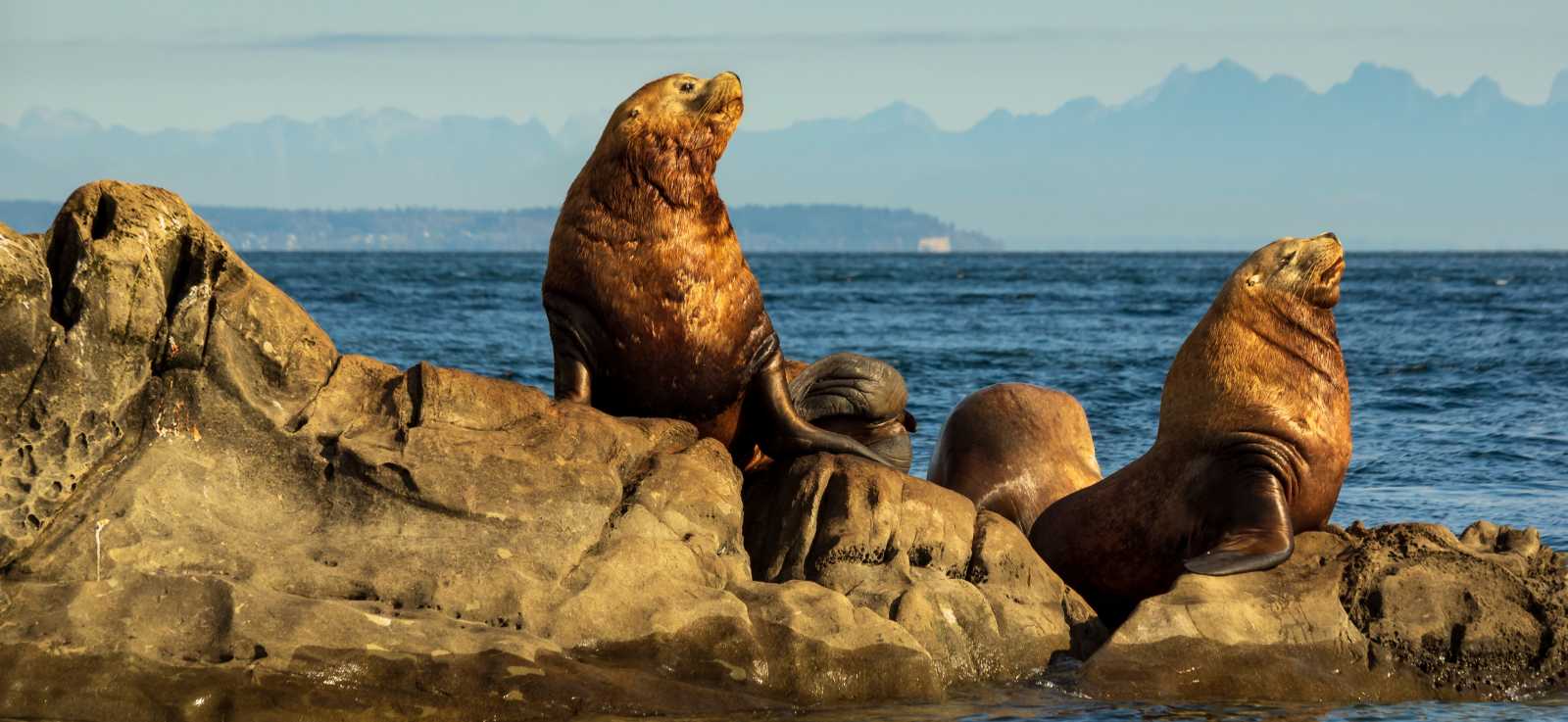
Steller sea lions are similar in appearance to California sea lions and are sometimes confused with them. However, Steller sea lions are much larger and lighter in color. Males may grow to 11 feet in length and weigh almost 2,500 pounds. Females are much smaller and may grow to 9 feet in length and weigh 1,000 pounds.
Steller sea lions are light tan to reddish-brown in color. They have a blunt face and a boxy, bear-like head. Adult males do not have a visible sagittal crest (the bump on the top of their heads) as is seen in adult male California sea lions. Adult male Steller sea lions have a bulky build and a very thick neck with longer fur that resembles a lion's mane, hence the name "sea lion."
Meet Our Patient: Smores
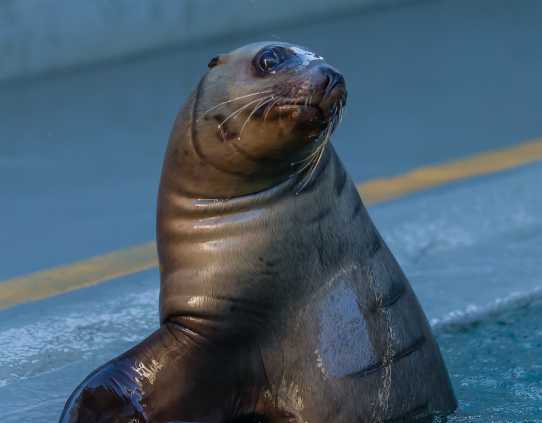
Steller sea lion Smores was found alone on a beach at just a few months old. At the Center, Smores was housed with many different patients. Spending time with companions of different species and ages helps Steller sea lion pups avoid habituating to humans while learning important behavior skills.
Smores formed a quick bond with a northern fur seal that was about 100 pounds smaller than her. After nine months of rehabilitation, Smores was released near the Farallon Islands, a marine sanctuary that is home to many other Steller sea lions.
The greatest threats to marine mammals are caused by people, but we can also be their greatest champions.
Sign up for email from The Marine Mammal Center to stay updated on how you can be an advocate and champion for marine mammals like Steller sea lions.


Habitat & Population Status
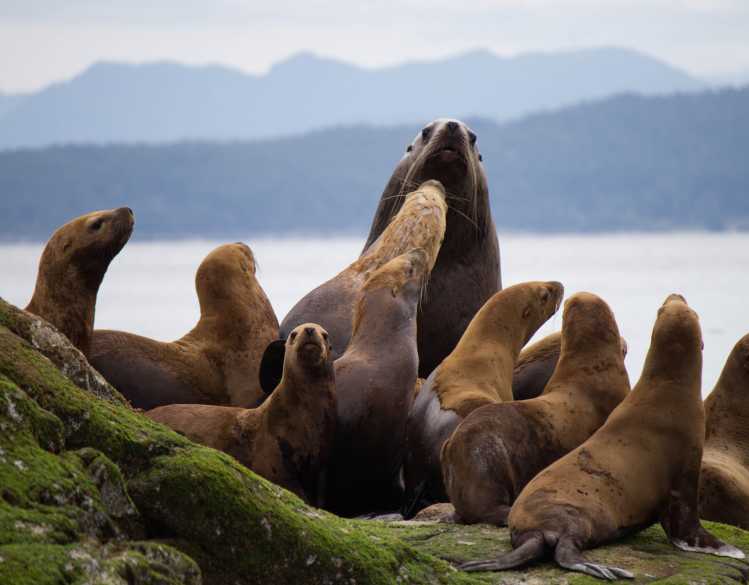
Steller sea lions are found in coastal waters in the northern Pacific Ocean, from Japan to Central California. Breeding occurs in areas ranging from Año Nuevo Island in Central California to the Kuril Islands north of Japan, with the greatest concentration of rookeries, or breeding grounds, in the Gulf of Alaska and Aleutian Islands.
Steller sea lions in U.S. waters are divided into two distinct population groups: the Western and Eastern populations. The differentiation is based primarily on genetic and physical differences, but also on differing population trends in the two regions.
Since the 1970s, the most significant drop in numbers was seen in the eastern Aleutian Islands and the western Gulf of Alaska. The extent of this decline led to the Steller sea lion species being listed as threatened range-wide in April 1990.
In the 1990s, the population decline continued in the western portions of the species’ range, which led officials to divide the species into the two distinct population segments seen today. The Western population was listed as endangered in 1997, and there are currently about 46,000 individuals in this group.
Recent population surveys suggest that for the past 25 to 30 years, the Eastern population has been growing steadily at about 3 percent per year. At certain sites, the number of individuals has more than doubled from 1979 to 2002.
The current minimum population estimate for the Eastern population is approximately 52,000 individuals. In October 2013, officials removed the Eastern group of Steller sea lions from the endangered species list. As this group had recovered, it no longer met the definition of an endangered or threatened species.
Unlike the Eastern population, the Western group has not met the recovery and de-listing criteria, and remains listed as endangered.
Breeding & Behavior
Pups typically are born from mid-May to mid-July, weighing 35 to 50 pounds. Mothers stay with their pups for one to two weeks before going off to hunt at sea.
During the breeding season, mothers spend roughly equal amounts of time hunting and nursing pups on land and gradually spend more time at sea as their pups get older. Pups usually nurse for a year, but some continue to nurse for up to three years.
Mating occurs 10 to 14 days after the pups are born.
During the breeding season, males do not eat. However, when they do eat, Steller sea lions enjoy a variety of fish, invertebrates and occasionally other pinnipeds. Known predators are killer whales (orcas) and white sharks.


