The Marine Mammal Center
Main Navigation learningwhat we do get involved
Become a Member
Adopt-a-Seal
Volunteer
Ways to Give

volunteer opportunities
    programs
    support services

sealine-volunteer newsletter

new volunteer orientation

classes and training for current volunteers

youth volunteering

volunteer intranet

Page Title - Volunteer
Secondary Page Title - Volunteer Opportunities
Programs

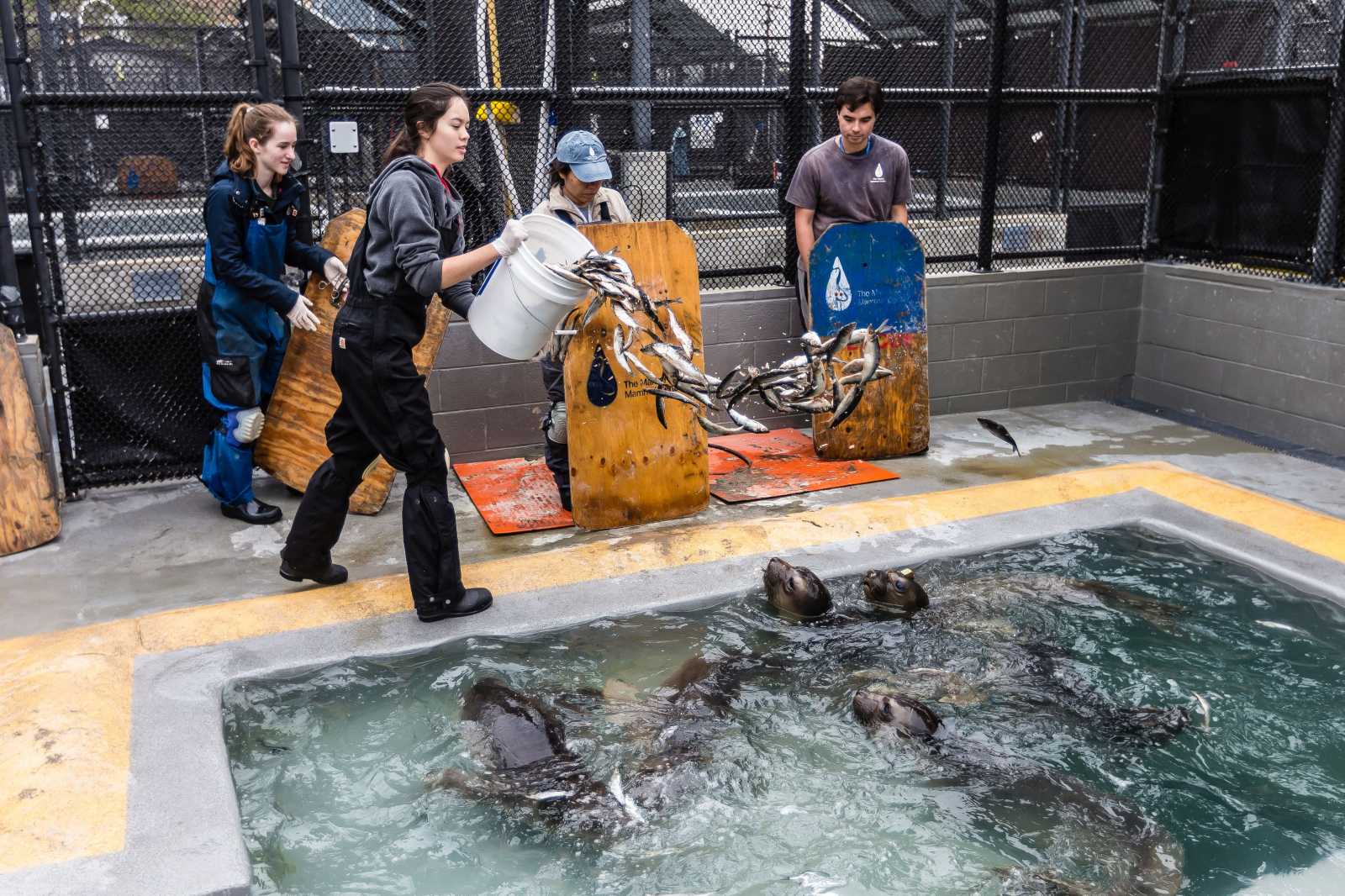
Volunteer putting northern elephant seals through "fish-school"Animal Care: Animal care crews assist with pen cleaning, laundry, dishes, weighing, charting, making formula, assisting with medical procedures and feeding. Commitment is for a minimum of six months, one day or night a week (the same day or night every week) for an 8 to 12 hour shift. There are 14 animal care crews during the regular season, one for each day and night of the week. During harbor seal season (roughly March-August) there are an additional 14 animal care crews to care for the harbor seal patients. All animal care volunteers will need to purchase slickers and boots. You must be at least 18 years of age and have a current tetanus shot. You can get started by attending an orientation. In the orientation session, you will be provided with a list of Animal Care supervisors whom you may contact to select a shift.


Volunteer working in research labScience/Research: The Science Department oversees data collection in a variety of areas. In our lab we process samples for parasitological, microbiological and other analyses. Many samples are collected during necropsy, when cause of death is determined. Other studies involve field work, such as telemetry and behavioral observations. Our scientists collaborate with others in the Bay Area, as well as internationally. Overall, we are able to contribute significantly to understanding marine mammals, causes of stranding, their diseases and development. Volunteers are needed seasonally to assist with lab, necropsy and field work.


Volunteer teaching studentsEducation: The Center's education programs include informal education for drop-in visitors at our main hospital in the Marin Headlands and at PIER 39 in San Francisco (home of the world-famous sea lions), scheduled group tours, and outreach to schools with The Whale Bus. Docents and instructors make it possible to share our understanding of marine mammals with people of all ages. Sessions for our Education Volunteers take place in January and August. Learn valuable teaching skills, natural history information, and interact with a diverse audience as you help make a difference for our marine mammal patients! Click here to learn more about the upcoming training.


Volunteers rescuing a California sea lionStranding: Drivers and rescue teams are needed to work with our Stranding Department at our main Sausalito/Marin Headlands hospital and at our field operations in San Luis Obispo (SLO), Moss Landing (MBO), and Anchor Bay/Fort Bragg (ABO). Stranding volunteers check on stranded animals reported by the public, rescue animals as necessary, and transport animals from our field operations to our main hospital. Training for drivers is minimal. Rescue training is more extensive. A weekly on-call commitment is preferred. You can get started by attending an orientation in your area.

Rescue Operations

Territory Covered Number to Call
Sausalito Operations Southern Sonoma County through San Mateo County (includes entire San Francisco Bay Area)

415.289.7371

Anchor Bay Operations
Fort Bragg
Mendocino County and northern Sonoma County 415.289.7371


Monterey Bay
Operations
Santa Cruz County and Monterey County

831.633.6298
San Luis Obispo Operations San Luis Obispo County 415.289.7371


Copyright © 2008 The Marine Mammal Center. All rights reserved.
Privacy Policy
| Terms of Use | Site Credits