Genetics and Pathology Associated with Klebsiella Pneumonia
- Infectious disease
- Pathology
Abstract
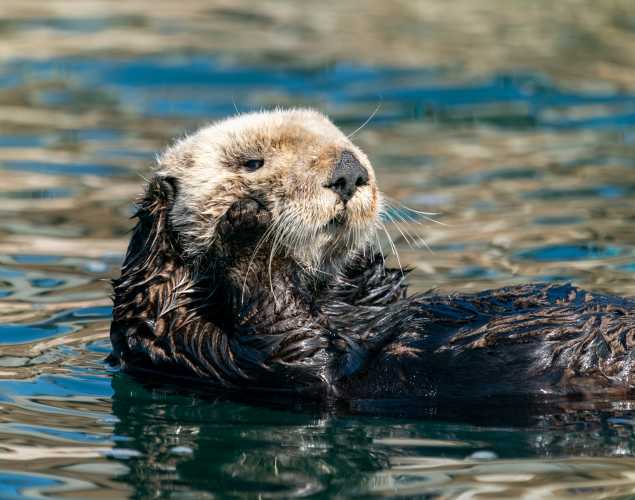
Southern sea otters (SSO: Enhydra lutris nereis) are a federally-listed threatened subspecies found almost exclusively in California, USA. Despite their zoonotic potential and lack of host specificity, K. pneumoniae and Klebsiella spp. have largely unknown epizootiology in SSOs. Klebsiella pneumoniae is occasionally isolated at necropsy, but not from live SSOs. Hypermucoviscous (HMV) K. pneumoniae strains are confirmed pathogens of Pacific Basin pinnipeds, but have not been previously isolated from SSOs. We characterized the virulence profiles of K. pneumoniae isolates from necropsied SSOs, evaluated killing of marine mammal K. pneumoniae following in vitro exposure to California sea lion (CSL: Zalophanus californianus) whole blood and serum, and characterized lesion patterns associated with Klebsiella spp. infection in SSOs. Four of 15 SSO K. pneumoniae isolates were HMV and all were recovered from SSOs that stranded during 2005. Many K. pneumoniae infections were associated with moderate to severe pathology as a cause of death or sequela. All HMV infections were assessed as a primary cause of death or as a direct result of the primary cause of death. Klebsiella-infected SSOs exhibited bronchopneumonia, tracheobronchitis and/or pleuritis, enteritis, Profilicollis sp. acanthocephalan peritonitis, septic peritonitis, and septicemia. All SSO HMV isolates were capsular type K2, the serotype most associated with HMV infections in CSLs. Multiplex PCR revealed two distinct virulence gene profiles within HMV isolates and two within non-HMV isolates. In vitro experiments investigating CSL whole blood and serum killing of K. pneumoniae suggest that HMV isolates are more resistant to serum killing than non-HMV isolates.
Chang, E.K., Miller, M., Shahin, K., Batac, F., Field, C.L., Duignan, P., Struve, C., Byrne, B.A., Murray, M.J., Greenwald, K. and Smith, W.A., 2021. Genetics and pathology associated with Klebsiella pneumoniae and Klebsiella spp. isolates from North American Pacific coastal marine mammals. Veterinary Microbiology, p.109307.
Meet The Experts
{"image":"\/People\/Portrait\/cara-field.jpg","alt":"Cara Field","title":"Cara Field","text":"Senior Director, Conservation Medicine","link_url":"https:\/\/www.marinemammalcenter.org\/person\/cara-field","link_text":"Read Bio"}

{"image":"\/People\/Portrait\/cropped-images\/PD_Gray whale Pacifica_IMG_0552-0-0-1270-992-1775170630.jpeg","alt":"Padraig Duignan","title":"P\u00e1draig Duignan","text":"Senior Director, Research Pathology","link_url":"https:\/\/www.marinemammalcenter.org\/person\/padraig-duignan","link_text":"Read Bio"}
Related Publications
{"image":"\/Animals\/Patients\/Elephant seals\/es-photo-by-bill-hunnewell-c-the-marine-mammal-center-1.jpg","alt":"northern elephant seal","title":"Muscle-Wasting Disease in Elephant Seal Pups","link_url":"https:\/\/www.marinemammalcenter.org\/publications\/muscle-wasting-disease-in-elephant-seal-pups","label":"Research Paper"}
{"image":"\/Animals\/Wild\/Bottlenose dolphin\/bottlenose-dolphins-leaping-shutterstock.jpg","alt":"dolphins leaping out of the water","title":"Fresh Water Skin Disease in Dolphins","link_url":"https:\/\/www.marinemammalcenter.org\/publications\/fresh-water-skin-disease-in-dolphins","label":"Research Paper"}
{"image":"\/Animals\/Wild\/Sea otter\/cropped-images\/sea-otter-grooming-head-shutterstock-22-86-3617-2826-1616709449.jpg","alt":"sea otter grooming","title":"Parasitic Skin Disease in Threatened Southern Sea Otters","link_url":"https:\/\/www.marinemammalcenter.org\/publications\/parasitic-skin-disease-in-threatened-southern-sea-otters","label":"Research Paper"}
{"image":"\/Animals\/Wild\/Other species\/cropped-images\/galapagos-sea-lion-shutterstock-954-376-2988-2334-1617750524.jpg","alt":"Galapagos sea lion","title":"Mycoplasmas in Galapagos Sea Lions and Their Association with Other Respiratory Pathogens","link_url":"https:\/\/www.marinemammalcenter.org\/publications\/occurrence-of-mycoplasmas-in-galapagos-sea-lions","label":"Research Paper"}
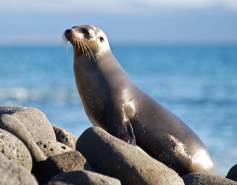
Mycoplasmas in Galapagos Sea Lions and Their Association with Other Respiratory Pathogens
Read MoreRelated News
{"image":"\/Animals\/Wild\/Gray whale\/cropped-images\/2025-03-30-gray-whale-BlackSandsBeach-c-the-marine-mammal-center-206-0-1270-992-1743546220.jpg","alt":"stranded gray whale","title":"Experts respond to a dead gray whale in the Marin Headlands as sightings of the species increase in San Francisco","link_url":"https:\/\/www.marinemammalcenter.org\/news\/experts-respond-to-a-dead-gray-whale-in-the-marin-headlands-as-sightings-of-the-species-increase-in-san-francisco","label":"Press Release","date":"2025-04-01 02:00:00"}
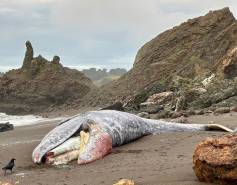
Experts respond to a dead gray whale in the Marin Headlands as sightings of the species increase in San Francisco
April 1, 2025
Read More{"image":"\/Animals\/Wild\/Gray whale\/cropped-images\/gray-whale-tail-sf-skyline-by-darrin-allen-c-the-marine-mammal-center-60-0-624-487-1719870230.jpg","alt":"gray whale tail seen above water with San Francisco skyline in the distance","title":"Mercury News: Lots of Gray Whales Are Swimming Under the Golden Gate Bridge into San Francisco Bay. Why?","link_url":"https:\/\/www.marinemammalcenter.org\/news\/mercury-news-lots-of-gray-whales-are-swimming-under-the-golden-gate-bridge-into-san-francisco-bay-why","label":"In the News","date":"2024-06-24 02:00:00"}
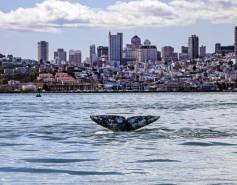
Mercury News: Lots of Gray Whales Are Swimming Under the Golden Gate Bridge into San Francisco Bay. Why?
June 24, 2024
Read More{"image":"\/Animals\/Wild\/Bottlenose dolphin\/cropped-images\/bottlenose-dolphins-leaping-shutterstock-391-0-3448-2693-1605038111.jpg","alt":"two dolphins leaping out of the waves","title":"\u201cThe Dolphin Dilemma\u201d Documentary Makes Waves On Film Festival Circuit","link_url":"https:\/\/www.marinemammalcenter.org\/news\/the-dolphin-dilemma-documentary-makes-waves-on-film-festival-circuit","label":"News Update","date":"2024-05-30 02:00:00"}
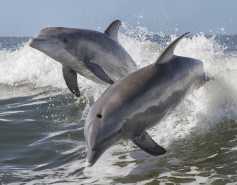
“The Dolphin Dilemma” Documentary Makes Waves On Film Festival Circuit
May 30, 2024
Read More{"image":"\/Animals\/Wild\/Gray whale\/cropped-images\/gray-whale-muir-beach-c-the-marine-mammal-center-66-2-1533-1198-1617991349.jpg","alt":"gray whale in shallow water","title":"LA Times: Starvation Has Decimated Gray Whales - Can the Giants Ever Recover?","link_url":"https:\/\/www.marinemammalcenter.org\/news\/la-times-starvation-has-decimated-gray-whales-can-the-giants-ever-recover","label":"In the News","date":"2024-03-27 02:00:00"}
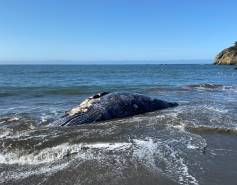
LA Times: Starvation Has Decimated Gray Whales - Can the Giants Ever Recover?
March 27, 2024
Read More