A Collaboration to Protect Whales and Support California’s Dungeness Crab Fishery
The Marine Mammal Center, Pacific Coast Federation of Fishermen’s Associations, and The Nature Conservancy Launch Collaboration to Protect Whales and Support California’s Dungeness Crab Fishery
New partnership, backed by the Clean Break Fund, pairs whale science, commercial fishing expertise, and conservation to reduce entanglement risk while sustaining a healthy fishery
(SAUSALITO, Calif. – October 22, 2026) The Marine Mammal Center, the Pacific Coast Federation of Fishermen’s Associations (PCFFA), and The Nature Conservancy (TNC) today announced the Dungeness Crab and Whale Conservation Collaborative, a new partnership bringing together scientists, commercial fishing, and conservationists to protect whales while supporting a healthy, open California Dungeness crab fishery.
Supported by a three-year grant from the Clean Break Fund, the collaboration represents a new approach to a longstanding challenge: bringing together different perspectives and expertise to develop better information and more collaborative solutions for whales and the fishery.
“Right now, one of the biggest obstacles to protecting whales in this fishery is simply not knowing, in real time, where they are,” said Kathi George, Director of the Schwartz Cetacean Conservation Program at The Marine Mammal Center. “By bringing together different monitoring technologies, scientific expertise, and the knowledge of the fishers who are on the water every day, we have an opportunity to build a much clearer picture of whale presence and behavior. That information can help inform decisions that reduce entanglement risk while supporting a sustainable fishery.”
“For generations, the Dungeness crab season has sustained our local fishing communities and a vibrant coastal economy with a California staple, but in recent years, costly delays have cut into its most critical catch,” said Chris Larsen, co-founder and Executive Chairman of Ripple Inc. and founder of the Clean Break Fund. “We live in the innovation capital of the world and the technology and expert partners exist today to both protect marine life and keep crab boats on the water for longer – we just have to be smarter about how we do it. This new collaboration brings scientists, conservationists, and fishermen into balance by deploying the most effective, modern methods available, sharing data in real time, and informing more dynamic fishery management decision-making.”
“California's commercial fishermen have a long history of finding solutions to challenges on the water,” said Lisa Damrosch, Executive Director of PCFFA. “This partnership brings that experience together with some of the best minds in science and conservation, with fishermen at the table from the very beginning. Together, we have an opportunity to find a better balance between protecting whales and sustaining a healthy, viable Dungeness crab fishery.”
“This collaboration will help strengthen the information that supports management decisions,” said Kate Kauer of The Nature Conservancy. “By helping management systems better incorporate new data and respond to changing conditions, we can improve outcomes for whales and fishing communities.”
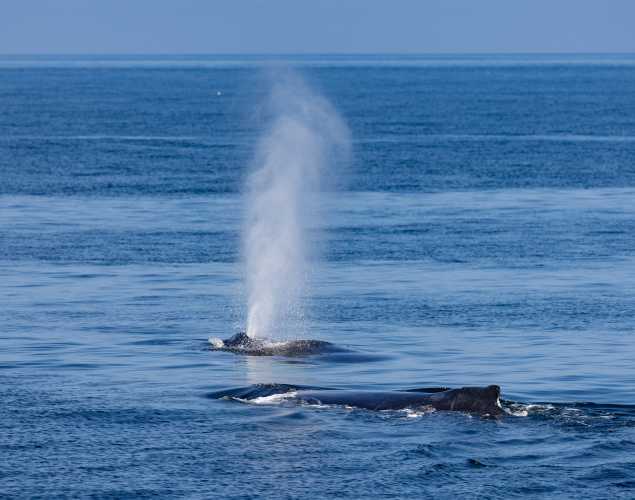
The Marine Mammal Center will lead the development of an integrated whale monitoring system, combining data from vessel surveys, drones, shore-based observations, and underwater acoustic gliders to improve understanding of whale presence, distribution, and behavior. PCFFA will bring commercial fishermen directly into the science and conservation effort through industry-led vessel surveys and participation in entanglement investigations, ensuring the fishing community’s knowledge and experience help inform the work from the start. The Nature Conservancy will lead efforts to expand industry-led vessel-based whale surveys and satellite-based whale detections, advance gear recovery technology, and support improvements to the data systems and policies that inform fishery management.
The collaboration will share its findings with the California Department of Fish and Wildlife (CDFW) and other relevant partners to help inform the Risk Assessment and Mitigation Program (RAMP) and related efforts to manage entanglement risk. By improving the information available to decision-makers, the partnership aims to support a more informed, adaptive approach to protecting whales and sustaining the fishery.
“Protecting whales and supporting a healthy fishing industry are goals we can work towards together,” the partners said. “Addressing a challenge this complex takes collaboration, a willingness to learn from one another, and a commitment to finding solutions grounded in science and the experience of people who work on the water. This partnership is an opportunity to do that work together.”
For more information or to set up an interview on this topic, please contact us at media@tmmc.org.
For breaking news about our whale responses as well as additional press materials, bookmark MarineMammalCenter.org/whale-stranding.
Learn More About Our Work Protecting Whales


Help protect whales!
You can support conservation efforts like these by donating to The Marine Mammal Center.
See Our Latest News
{"image":"\/People\/Action\/Response\/cropped-images\/c-common-dolphin93026cuesta-inlet-in-morro-bayphoto-c-the-marine-mammal-center-noaa-mmhsrp-24359-0-399-1270-992-1790883642.jpg","alt":"Stranded dolphin response","title":"Three Common Dolphins Freed from Mudflats in Morro Bay","link_url":"https:\/\/www.marinemammalcenter.org\/news\/three-common-dolphins-freed-from-mudflats-in-morro-bay","label":"News Update","date":"2026-10-02 02:00:00"}
{"image":"\/Animals\/Wild\/Humpback whale\/cropped-images\/a-humpback-whalesf-bay91526photo-by-norely-faz-c-the-marine-mammal-center-noaa-permit-26532-772-1-1270-992-1789760973.png","alt":"Humpback whale Rio","title":"Humpback Whale \"Rio\" Spotted in the Sacramento-San Joaquin Delta","link_url":"https:\/\/www.marinemammalcenter.org\/news\/humpback-whale-rio-spotted-in-the-sacramento-san-joaquin-delta","label":"News Update","date":"2026-09-18 12:10:00"}
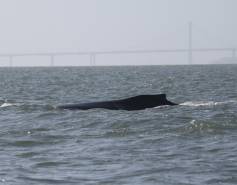
Humpback Whale "Rio" Spotted in the Sacramento-San Joaquin Delta
September 18, 2026
Read More{"image":"\/Animals\/Patients\/California sea lions\/2024\/d-california-sea-lionsin-treatment-for-domoic-acidsausalito72624photo-by-giancarlo-rulli-c-the-marine-mammal-center.jpg","alt":"California sea lions","title":"SF GATE: Sick, disoriented sea lions are washing up on California beaches","link_url":"https:\/\/www.marinemammalcenter.org\/news\/sf-gate-sick-disoriented-sea-lions-are-washing-up-on-california-beaches","label":"In the News","date":"2026-09-01 10:39:22"}
SF GATE: Sick, disoriented sea lions are washing up on California beaches
September 1, 2026
Read More{"image":"\/Animals\/Wild\/Sea otter\/cropped-images\/sea-otter-shutterstock-118-0-2496-1950-1604015482.jpg","alt":"sea otter eating clams","title":"What Do Sea Otters Eat? And Other Otter Trivia","link_url":"https:\/\/www.marinemammalcenter.org\/news\/what-do-sea-otters-eat-and-other-otter-trivia","label":"News Update","date":"2026-09-01 02:00:00"}