
The New York Times: 2,000 Sea Lions Roamed, Just to Make This Dock Their Home
Published by The New York Times: May 30, 2024
The number of visitors to San Francisco has not rebounded to its prepandemic level — not among humans, anyway. Sea lions, on the other hand, are swimming to the city in higher numbers than ever recorded.
This week, sea lion counters — yes, they exist — tallied 2,000 of the whiskered, blubbery creatures in the water alongside Pier 39 on the city’s northern edge. That’s 600 more than the previous record of 1,400 set in the early 1990s, according to Sheila Chandor, who has been the harbor master at Pier 39 since 1985.
We have been truly overrun.
“They’re not buying the doom loop!” Ms. Chandor said with a laugh, referring to the theory circulated by detractors that San Francisco is on the verge of ruin. “We have been truly overrun.”
The greatest threats to marine mammals are caused by people, but we can also be their greatest champions.
Sign up for email from The Marine Mammal Center to stay updated on how you can be an advocate and champion for marine mammals like California Sea Lions.
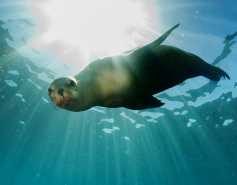
{"image":"\/Animals\/Wild\/California sea lion\/csl-underwater-shutterstock.jpg","alt":"California sea lion underwater","label":"Pinnipeds","title":"California Sea Lion","link_url":"\/animal-care\/learn-about-marine-mammals\/pinnipeds\/california-sea-lion","type":"page"}
{"image":"\/Animals\/Wild\/California sea lion\/cropped-images\/pier-39-shutterstock-10-0-4328-3380-1604430869.jpg","alt":"sea lions at PIER 39","title":"NPR: A Seafood Bounty Lures Sea Lions to S.F.'s PIER 39 in Numbers Not Seen in 15 Years","link_url":"https:\/\/www.marinemammalcenter.org\/news\/npr-a-seafood-bounty-lures-sea-lions-to-sfs-pier-39-in-numbers-not-seen-in-15-years","label":"In the News","date":"2024-05-04 02:00:00","type":"news"}

NPR: A Seafood Bounty Lures Sea Lions to S.F.'s PIER 39 in Numbers Not Seen in 15 Years
May 4, 2024
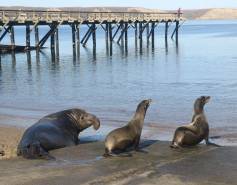
Read More{"image":"\/Animals\/Patients\/Releases\/cropped-images\/es-and-csl-at-release-by-joanne-lasnier-c-the-marine-mammal-center-218-0-3804-2971-1700180094.jpg","alt":"An adult elephant seal and two California sea lions approach the water's edge","title":"Seal vs. Sea Lion: Your Guide to Knowing the Difference","link_url":"https:\/\/www.marinemammalcenter.org\/news\/seal-vs-sea-lion-your-guide-to-knowing-the-difference","label":"News Update","date":"2023-11-28 01:00:00","type":"news"}
{"image":"\/Animals\/Wild\/Harbor seal\/cropped-images\/harbor-seals-shutterstock-307-0-4076-3184-1645666025.jpg","alt":"group of harbor seals on a beach","title":"ABC7: You Might Be Unintentionally Harming Young Marine Mammals, Rescue Center Says","link_url":"https:\/\/www.marinemammalcenter.org\/news\/abc7-you-might-be-unintentionally-harming-young-marine-mammals-rescue-center-says","label":"In the News","date":"2024-04-25 02:00:00","type":"news"}

ABC7: You Might Be Unintentionally Harming Young Marine Mammals, Rescue Center Says
April 25, 2024
Read MoreLearn More About Our Work Saving Marine Mammals


Yes, I want to save a life!
You’ll be giving sick and injured animals the best possible care at the Center’s state-of-the-art hospital. With your gift today, you are giving a patient a second chance at life in the wild.
See Our Latest News
{"image":"\/Animals\/Wild\/Humpback whale\/humpback-whale-spout-by-bill-hunnewell-c-the-marine-mammal-center.jpg","alt":"Humpback whale spout","title":"A Collaboration to Protect Whales and Support California\u2019s Dungeness Crab Fishery","link_url":"https:\/\/www.marinemammalcenter.org\/news\/collaboration-to-protect-whales-and-support-californias-dungeness-crab-fishery","label":"Press Release","date":"2026-10-22 02:00:00"}
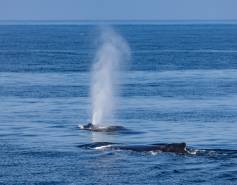
A Collaboration to Protect Whales and Support California’s Dungeness Crab Fishery
October 22, 2026
Read More{"image":"\/People\/Action\/Response\/cropped-images\/c-common-dolphin93026cuesta-inlet-in-morro-bayphoto-c-the-marine-mammal-center-noaa-mmhsrp-24359-0-399-1270-992-1790883642.jpg","alt":"Stranded dolphin response","title":"Three Common Dolphins Freed from Mudflats in Morro Bay","link_url":"https:\/\/www.marinemammalcenter.org\/news\/three-common-dolphins-freed-from-mudflats-in-morro-bay","label":"News Update","date":"2026-10-02 02:00:00"}
{"image":"\/Animals\/Wild\/Humpback whale\/cropped-images\/a-humpback-whalesf-bay91526photo-by-norely-faz-c-the-marine-mammal-center-noaa-permit-26532-772-1-1270-992-1789760973.png","alt":"Humpback whale Rio","title":"Humpback Whale \"Rio\" Spotted in the Sacramento-San Joaquin Delta","link_url":"https:\/\/www.marinemammalcenter.org\/news\/humpback-whale-rio-spotted-in-the-sacramento-san-joaquin-delta","label":"News Update","date":"2026-09-18 12:10:00"}
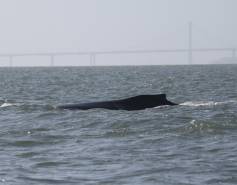
Humpback Whale "Rio" Spotted in the Sacramento-San Joaquin Delta
September 18, 2026
Read More{"image":"\/Animals\/Patients\/California sea lions\/2024\/d-california-sea-lionsin-treatment-for-domoic-acidsausalito72624photo-by-giancarlo-rulli-c-the-marine-mammal-center.jpg","alt":"California sea lions","title":"SF GATE: Sick, disoriented sea lions are washing up on California beaches","link_url":"https:\/\/www.marinemammalcenter.org\/news\/sf-gate-sick-disoriented-sea-lions-are-washing-up-on-california-beaches","label":"In the News","date":"2026-09-01 10:39:22"}
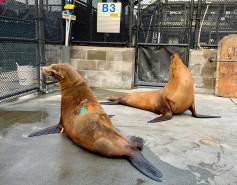
SF GATE: Sick, disoriented sea lions are washing up on California beaches
September 1, 2026
Read More