Algal Toxin Impairs Sea Lion Memory and Hippocampal Connectivity, With Implications for Strandings
- Domoic acid
Abstract
Domoic acid (DA) is a naturally occurring neurotoxin known to harm marine animals. DA-producing algal blooms are increasing in size and frequency. Although chronic exposure is known to produce brain lesions, the influence of DA toxicosis on behavior in wild animals is unknown. We showed, in a large sample of wild sea lions, that spatial memory deficits are predicted by the extent of right dorsal hippocampal lesions related to natural exposure to DA and that exposure also disrupts hippocampal-thalamic brain networks. Because sea lions are dynamic foragers that rely on flexible navigation, impaired spatial memory may affect survival in the wild.
Cook, P.F., Reichmuth, C., Rouse, A.A., Libby, L.A., Dennison, S.E., Carmichael, O.T., Kruse-Elliott, K.T., Bloom, J., Singh, B., Fravel, V.A., Barbosa, L., Stuppino, J.J., Van Bonn, W.G., Gulland, F.M.D., Ranganath, C. 2015. Algal toxin impairs sea lion memory and hippocampal connectivity, with implications for strandings. Science. 350(6267): 1545-1547.
Related Publications
{"image":"\/Animals\/Patients\/California sea lions\/2020\/csl-oso-by-bill-hunnewell-c-the-marine-mammal-center-1.jpg","alt":"California sea lion","title":"Loss of Neuron Connectors in the Brains of Sea Lions with Epilepsy","link_url":"https:\/\/www.marinemammalcenter.org\/publications\/loss-of-neuron-connectors-in-the-brains-of-sea-lions-with-epilepsy","label":"Research Paper"}
{"image":"\/Animals\/Wild\/California sea lion\/cropped-images\/sea-lion-pup-shutterstock-451-142-3018-2358-1603915228.jpg","alt":"California sea lion pup","title":"Domoic Acid in Fetal Fluids of California Sea Lions","link_url":"https:\/\/www.marinemammalcenter.org\/publications\/domoic-acid-in-fetal-fluids-of-california-sea-lions","label":"Research Paper"}
{"image":"\/Animals\/Patients\/California sea lions\/cropped-images\/csl-by-bill-hunnewell-c-the-marine-mammal-center-2-0-1031-1794-1401-1603916128.jpg","alt":"California sea lion","title":"Evaluating Sense of Smell in California Sea Lions and Relevance to Domoic Acid","link_url":"https:\/\/www.marinemammalcenter.org\/publications\/evaluating-sense-of-smell-in-california-sea-lions-and-relevance-to-domoic-acid","label":"Research Paper"}
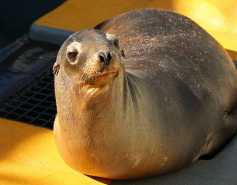
Evaluating Sense of Smell in California Sea Lions and Relevance to Domoic Acid
Read More{"image":"\/Animals\/Wild\/Steller sea lion\/cropped-images\/steller-sea-lion-harem-shutterstock-648-0-4424-3456-1603916879.jpg","alt":"Group of Steller sea lions","title":"Algal Toxins in Alaskan Marine Mammals Foraging in a Changing Environment","link_url":"https:\/\/www.marinemammalcenter.org\/publications\/algal-toxins-in-alaskan-marine-mammals-foraging-in-a-changing-environment","label":"Research Paper"}
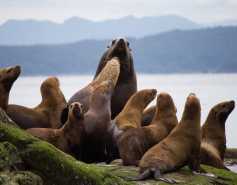
Related News
{"image":"\/Animals\/Patients\/California sea lions\/2024\/d-california-sea-lionsin-treatment-for-domoic-acidsausalito72624photo-by-giancarlo-rulli-c-the-marine-mammal-center.jpg","alt":"California sea lions","title":"SF GATE: Sick, disoriented sea lions are washing up on California beaches","link_url":"https:\/\/www.marinemammalcenter.org\/news\/sf-gate-sick-disoriented-sea-lions-are-washing-up-on-california-beaches","label":"In the News","date":"2026-09-01 10:39:22"}
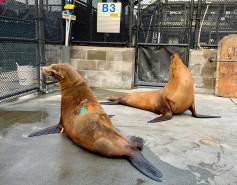
SF GATE: Sick, disoriented sea lions are washing up on California beaches
September 1, 2026
Read More{"image":"\/People\/Action\/Volunteers\/h-california-sea-lion-transportdomoic-acidslo-countydomoic-acid80524photo-by-giancarlo-rulli-c-the-marine-mammal-center.jpg","alt":"Volunteers transporting a California sea lion","title":"An Update on Domoic Acid Poisoning on the California Coast","link_url":"https:\/\/www.marinemammalcenter.org\/news\/an-update-on-domoic-acid-poisoning-on-the-california-coast","label":"News Update","date":"2026-08-28 02:00:00"}
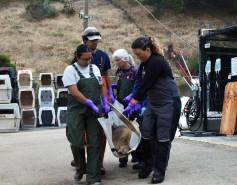
{"image":"\/Animals\/Wild\/California sea lion\/cropped-images\/csl-release-4-5-24photo-by-chris-deimler-c-the-marine-mammal-center-138-0-1270-992-1745348188.jpg","alt":"Four young California sea lions walk on the beach toward the ocean.","title":"Achievements in Ocean Health","link_url":"https:\/\/www.marinemammalcenter.org\/news\/achievements-in-ocean-health","label":"News Update","date":"2025-04-23 10:20:00"}
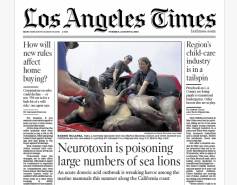
{"image":"\/Animals\/Patients\/California sea lions\/cropped-images\/LA Times Front Page 8.13.24-340-15-1270-992-1723588213.png","alt":"LA Times Front Page Domoic Acid Sea Lions","title":"LA Times: Neurotoxin is Poisoning Large Numbers of Sea Lions","link_url":"https:\/\/www.marinemammalcenter.org\/news\/la-times-neurotoxin-is-poisoning-large-numbers-of-sea-lions","label":"In the News","date":"2024-08-13 02:00:00"}