Seasonal Migration Contributes to Spread of Leptospirosis
- Leptospirosis
Abstract
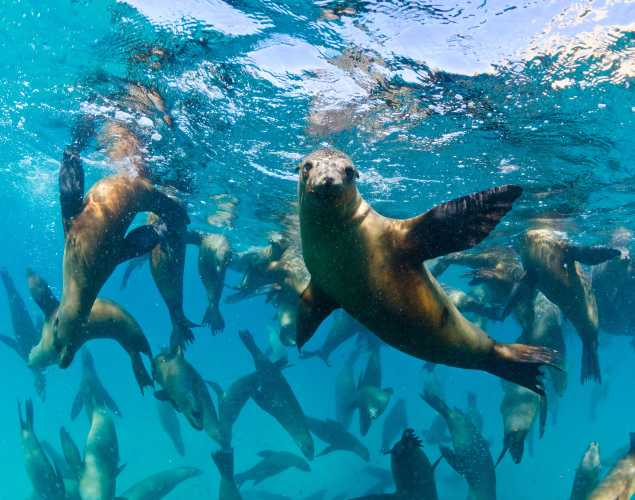
Leptospirosis is one of the most widespread bacterial zoonoses in the world and affects most mammalian species. Although leptospirosis is well documented and characterized in terrestrial species, less information is available regarding the distribution and impact of leptospirosis in marine mammals. Additionally, the role of animal migrations on the geographical spread of leptospirosis has not been reported. Periodic epizootic outbreaks of acute leptospirosis among California sea lions (Zalophus californianus) have been reported since 1971. In this study, we collected samples from California sea lions stranded along the Pacific coast of North America during the most recent epidemic in 2004, and maintained leptospirosis surveillance of the California sea lion population along the California coast through 2007. Several isolates of Leptospira interrogans serovar Pomona were obtained from kidney and urine samples collected during this study, a finding consistent with serological evidence that California sea lions are persistently exposed to this leptospiral serovar. Combined, these data support a model whereby California sea lions are maintenance hosts for L. interrogans serovar Pomona, yet periodically undergo outbreaks of acute infection. During the 2004 outbreak, the incidence of new leptospirosis cases among California sea lions coincided with the seasonal movement of male sea lions from rookeries along the coast of central and southern California north as far as British Columbia. These data show that seasonal animal movement contributes to the distribution of leptospirosis across a large geographical region.
Zuerner, R.L, Cameron, C.E., Raverty, S., Robinson, J., Colegrove, K.M., Norman, S.A., Lambourn, D., Jefferies, S., Alt, D.P. and Gulland, F. 2009. Geographical dissemination of Leptospiria interrogans serovar Pomona during seasonal migration of California sea lions. Veterinary Microbiology. 137: 105-110.
Related Publications
{"image":"\/Animals\/Wild\/California sea lion\/cropped-images\/sea-lions-in-water-photo-c-bill-hunnewell-2140-212-1308-1022-1603918234.jpg","alt":"large group of California sea lions in the water","title":"Detecting the Spread of Leptospirosis Through Asymptomatic Carriers","link_url":"https:\/\/www.marinemammalcenter.org\/publications\/detecting-the-spread-of-leptospirosis-through-asymptomatic-carriers","label":"Research Paper"}
{"image":"\/Animals\/Patients\/California sea lions\/cropped-images\/csl-by-bill-hunnewell-c-the-marine-mammal-center-7-0-1446-2827-2208-1603918668.jpg","alt":"California sea lion on pool ledge","title":"Effectiveness of Antibiotics in Treating Leptospirosis in California Sea Lions","link_url":"https:\/\/www.marinemammalcenter.org\/publications\/effectiveness-of-antibiotics-in-treating-leptospirosis-in-california-sea-lions","label":"Research Paper"}
Effectiveness of Antibiotics in Treating Leptospirosis in California Sea Lions
Read More{"image":"\/Animals\/Patients\/California sea lions\/cropped-images\/csl-by-bill-hunnewell-c-the-marine-mammal-center-5-0-1-3112-2431-1603919011.jpg","alt":"California sea lion diving into a pool","title":"First Report of Asymptomatic Carrier Transmission of Leptospirosis","link_url":"https:\/\/www.marinemammalcenter.org\/publications\/first-report-of-asymptomatic-carrier-transmission-of-leptospirosis","label":"Research Paper"}
{"image":"\/Animals\/Patients\/California sea lions\/cropped-images\/csl-eating-by-bill-hunnewell-c-the-marine-mammal-center-0-361-1799-1405-1617816863.jpg","alt":"California sea lion eating a fish","title":"Predicting Prognosis in Wildlife Rehabilitation: A Case Study of Leptospirosis in Sea Lions","link_url":"https:\/\/www.marinemammalcenter.org\/publications\/predicting-prognosis-in-wildlife-rehabilitation-a-case-study-of-leptospirosis","label":"Research Paper"}
Predicting Prognosis in Wildlife Rehabilitation: A Case Study of Leptospirosis in Sea Lions
Read MoreRelated News
{"image":"\/Animals\/Patients\/California sea lions\/2025\/cropped-images\/dottie-csl-photo-by-bill-hunnewell-218-0-1270-992-1759777087.jpg","alt":"California sea lion","title":"LA Times: Marine mammals are dying in record numbers along the California coast","link_url":"https:\/\/www.marinemammalcenter.org\/news\/la-times-marine-mammals-are-dying-in-record-numbers-along-the-california-coast","label":"In the News","date":"2025-10-03 02:00:00"}
LA Times: Marine mammals are dying in record numbers along the California coast
October 3, 2025
Read More{"image":"\/Animals\/Wild\/Humpback whale\/cropped-images\/humpback-whale-sea-lions-photo-c-bill-hunnewell-102-0-1270-992-1743014972.jpg","alt":"A California sea lion jumps out of the ocean next to a humpback whale showing its tail and another whale showing its back.","title":"What is the Loudest Animal on Earth? And Other Animal Trivia","link_url":"https:\/\/www.marinemammalcenter.org\/news\/what-is-the-loudest-animal-on-earth-and-other-animal-trivia","label":"News Update","date":"2025-03-26 07:00:00"}
{"image":"\/Animals\/Patients\/California sea lions\/2024\/csl-autumn-photo-by-chris-deimler-c-the-marine-mammal-center.jpg","alt":"A California sea lion with a small satellite tag on its back walks on a rocky beach toward the ocean.","title":"From Treating Sick Sea Lions to Tracking Them in the Wild: Follow Autumn","link_url":"https:\/\/www.marinemammalcenter.org\/news\/from-treating-sick-sea-lions-to-tracking-them-in-the-wild-follow-autumn","label":"Patient Update","date":"2025-02-27 15:23:46"}
From Treating Sick Sea Lions to Tracking Them in the Wild: Follow Autumn
February 27, 2025
Read More{"image":"\/Misc\/cropped-images\/leashed-dog-on-beach-shutterstock-10-10-5572-4352-1696014237.jpg","alt":"a golden retriever lying on a sandy beach with a leash and harness","title":"How to Keep Your Dog Safe on Beaches","link_url":"https:\/\/www.marinemammalcenter.org\/news\/how-to-keep-your-dog-safe-on-beaches","label":"News Update","date":"2023-09-29 02:00:00"}