
Use of a Lymph-Node Explant Culture System from California Sea Lions to Study Phocine Distemper Virus
- Infectious disease
Abstract
Phocine distemper virus (PDV) is a significant cause of mortality for phocid seals; however, the susceptibility of otariids to this virus is poorly understood. The authors used a lymph-node explant culture system from California sea lions (Zalophus californianus, CSL) to investigate: (1) the role of signaling lymphocyte activation molecule (SLAM) and nectin-4 in PDV infection and their cellular expression patterns, (2) if PDV induces transcriptional regulation of cell-entry receptors, and (3) the involvement of apoptosis in PDV infection. PDV replicated in the lymph-node explants with peak replication 3 days post-infection (dpi), but the replication was not sustained 4 to 5 dpi. The PDV+ cells co-localized SLAM and nectin-4. These cells expressed IBA1, indicating a histiocytic lineage. Comparison of receptor expression between infected and mock-infected lymph nodes suggested transcriptional downregulation of both receptors during the initial stage of infection and upregulation during the late stage of infection, but the values lack of statistical significance. Cleaved caspase-3+ cells were slightly increased in the infected lymph nodes compared with the mock-infected lymph node from 1 to 4 dpi, but without statistical significance, and a few apoptotic cells co-expressed PDV. The results suggest that lymph-node explants might be an important model to study PDV pathogenesis. CSLs have the potential to be infected with PDV, as they express both cell-entry receptors in histiocytes. The lack of statistical significance in the PDV replication, transcriptional regulation of viral receptors, and changes in apoptosis suggest that although CSL might be infected by PDV, they might be less susceptible than phocid species.
Gonzales-Viera, O., Goldstein, T., Duignan, P., Eiamcharoen, P., Keel, M.K., 2023. California sea lion (Zalophus californianus) lymph-node explant reveals involvement and possible transcriptional regulation of SLAM and nectin-4 during phocine distemper virus infection. Veterinary Pathology 2023;0(0).
Meet The Experts
{"image":"\/People\/Portrait\/cropped-images\/PD_Gray whale Pacifica_IMG_0552-0-0-1270-992-1775170630.jpeg","alt":"Padraig Duignan","title":"P\u00e1draig Duignan","text":"Senior Director, Research Pathology","link_url":"https:\/\/www.marinemammalcenter.org\/person\/padraig-duignan","link_text":"Read Bio"}
Related Publications
{"image":"\/Animals\/Wild\/Other species\/nz-sea-lion-shutterstock.jpg","alt":"New Zealand sea lion","title":"Causes of Death in Two Populations of New Zealand Sea Lions","link_url":"https:\/\/www.marinemammalcenter.org\/publications\/causes-of-death-in-two-populations-of-new-zealand-sea-lions","label":"Research Paper"}
{"image":"\/Animals\/Patients\/California sea lions\/csl-by-bill-hunnewell-c-the-marine-mammal-center-6.jpg","alt":"California sea lions","title":"Zoonotic Bacteria Persistence and Susceptibility","link_url":"https:\/\/www.marinemammalcenter.org\/publications\/zoonotic-bacteria-persistence-and-susceptibility","label":"Research Paper"}
{"image":"\/Animals\/Patients\/California sea lions\/cropped-images\/csl-photo-by-bill-hunnewell-c-the-marine-mammal-center-1-0-0-2358-1722-1600891644.jpg","alt":"California sea lions","title":"Emerging Viruses in Marine Mammals","link_url":"https:\/\/www.marinemammalcenter.org\/publications\/emerging-viruses-in-marine-mammals","label":"Research Paper"}
{"image":"\/Animals\/Patients\/California sea lions\/csl-photo-by-bill-hunnewell-c-the-marine-mammal-center-12.jpg","alt":"two California sea lions","title":"Multi-Phase Muscle Breakdown in California Sea Lions","link_url":"https:\/\/www.marinemammalcenter.org\/publications\/multi-phase-muscle-breakdown-in-california-sea-lions","label":"Research Paper"}
Recent News
{"image":"\/Animals\/Wild\/Other species\/cropped-images\/c-fin-whalecowell-beachsanta-cruz111226photo-by-gina-lonati-c-the-marine-mammal-center-noaa-permit-24359-58-1-1270-992-1795029425.png","alt":"Fin whale","title":"Fin Whale Transported from Santa Cruz Beach for Necropsy by Marine Mammal Response Partners","link_url":"https:\/\/www.marinemammalcenter.org\/news\/fin-whale-transported-from-santa-cruz-beach-for-necropsy","label":"Press Release","date":"2026-11-13 01:00:00"}
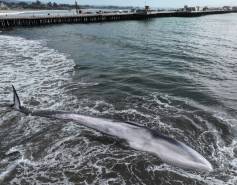
Fin Whale Transported from Santa Cruz Beach for Necropsy by Marine Mammal Response Partners
November 13, 2026
Read More{"image":"\/Animals\/Patients\/Harbor seals\/2013\/cropped-images\/hs-bogey-by-ingrid-overgard-c-the-marine-mammal-center-371-0-2712-2118-1607385758.jpg","alt":"harbor seal Bogey","title":"Top Holiday Gifts for Ocean Lovers","link_url":"https:\/\/www.marinemammalcenter.org\/news\/top-eco-friendly-holiday-gifts-that-give-back","label":"News Update","date":"2026-11-02 01:00:00"}
{"image":"\/People\/Action\/Volunteers\/cslpangorescuephoto-c-niko-panagopoulos-35.jpg","alt":"California sea lion rescue","title":"The Marine Mammal Center Responds to Largest Domoic Acid Outbreak in Its History","link_url":"https:\/\/www.marinemammalcenter.org\/news\/the-marine-mammal-center-responds-to-largest-domoic-acid-outbreak-in-its-history","label":"News Update","date":"2026-10-28 02:00:00"}
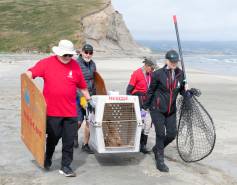
The Marine Mammal Center Responds to Largest Domoic Acid Outbreak in Its History
October 28, 2026
Read More{"image":"\/Animals\/Wild\/Humpback whale\/humpback-whale-spout-by-bill-hunnewell-c-the-marine-mammal-center.jpg","alt":"Humpback whale spout","title":"A Collaboration to Protect Whales and Support California\u2019s Dungeness Crab Fishery","link_url":"https:\/\/www.marinemammalcenter.org\/news\/collaboration-to-protect-whales-and-support-californias-dungeness-crab-fishery","label":"Press Release","date":"2026-10-22 02:00:00"}
A Collaboration to Protect Whales and Support California’s Dungeness Crab Fishery
October 22, 2026
Read More