Zoonoses in the workplace: A Seroprevalence study of Coxiella, Brucella, and Leptospira among marine mammal rescue and rehabilitation workers in California
- Leptospirosis
Abstract
Background: Q fever, brucellosis, and leptospirosis are zoonoses typically associated with terrestrial animal reservoirs. These bacterial agents are now known to infect marine mammal species, though little is known about potential human health risks from marine mammal reservoir species. We investigated potential risks of these bacteria in humans associated with marine mammal exposure.
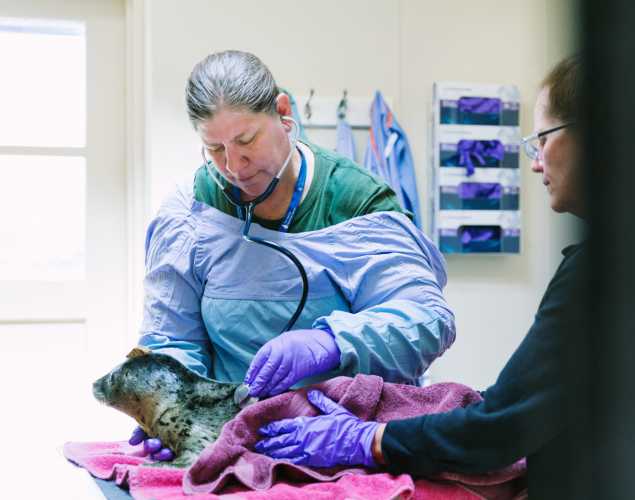
Methods: The Marine Mammal Center (TMMC) in Sausalito, California, requested a Health Hazard Evaluation by the National Institute for Occupational Safety and Health. In June 2011, an investigation occurred, which included a written questionnaire and serosurvey among workers for Coxiella burnetii, Brucella spp., and Leptospira spp., and an environmental assessment for C. burnetii.
Results: Serologic evidence of past exposure was detected in 4% (C. burnetii), 0% (Brucella), and 1% (Leptospira) of 213 participants, respectively. One of 130 environmental samples tested positive for C. burnetii. No significant marine mammal-specific risk factors were identified, but some safety deficiencies were noted that could lead to a higher risk of exposure to zoonotic diseases.
Conclusion: Although this study did not identify disease exposure risks associated with marine mammals, additional studies in different settings of other groups with frequent exposure to marine mammals are warranted. Some deficiencies in safety were noted, and based on these, TMMC modified protocols to improve safety.
Bjork, A., Stoddard, R.A., Anderson, A.D., de Perio, M.A., Niemeier, R.T., Self, J.S., Fitzpatrick, K.A., Gulland, F.M., Field, C.L., Kersh, G.J. and Gibbins, J.D., 2024. Zoonoses in the workplace: A Seroprevalence study of Coxiella, Brucella, and Leptospira among marine mammal rescue and rehabilitation workers in California. Public Health Challenges, 3(2), p.e132.
Meet The Experts
{"image":"\/People\/Portrait\/cara-field.jpg","alt":"Cara Field","title":"Cara Field","text":"Senior Director, Conservation Medicine","link_url":"https:\/\/www.marinemammalcenter.org\/person\/cara-field","link_text":"Read Bio"}
Related Publications
{"image":"\/Animals\/Wild\/California sea lion\/cropped-images\/sea-lions-in-water-photo-c-bill-hunnewell-2140-212-1308-1022-1603918234.jpg","alt":"large group of California sea lions in the water","title":"Detecting the Spread of Leptospirosis Through Asymptomatic Carriers","link_url":"https:\/\/www.marinemammalcenter.org\/publications\/detecting-the-spread-of-leptospirosis-through-asymptomatic-carriers","label":"Research Paper"}
{"image":"\/Animals\/Patients\/California sea lions\/cropped-images\/csl-by-bill-hunnewell-c-the-marine-mammal-center-7-0-1446-2827-2208-1603918668.jpg","alt":"California sea lion on pool ledge","title":"Effectiveness of Antibiotics in Treating Leptospirosis in California Sea Lions","link_url":"https:\/\/www.marinemammalcenter.org\/publications\/effectiveness-of-antibiotics-in-treating-leptospirosis-in-california-sea-lions","label":"Research Paper"}
Effectiveness of Antibiotics in Treating Leptospirosis in California Sea Lions
Read More{"image":"\/Animals\/Patients\/California sea lions\/cropped-images\/csl-by-bill-hunnewell-c-the-marine-mammal-center-5-0-1-3112-2431-1603919011.jpg","alt":"California sea lion diving into a pool","title":"First Report of Asymptomatic Carrier Transmission of Leptospirosis","link_url":"https:\/\/www.marinemammalcenter.org\/publications\/first-report-of-asymptomatic-carrier-transmission-of-leptospirosis","label":"Research Paper"}
{"image":"\/Animals\/Wild\/California sea lion\/cropped-images\/sea-lions-underwater-baja-shutterstock-186-4-4173-3260-1603919420.jpg","alt":"California sea lions underwater","title":"Seasonal Migration Contributes to Spread of Leptospirosis","link_url":"https:\/\/www.marinemammalcenter.org\/publications\/seasonal-migration-contributes-to-spread-of-leptospirosis","label":"Research Paper"}
Related News
{"image":"\/Animals\/Patients\/California sea lions\/2025\/cropped-images\/dottie-csl-photo-by-bill-hunnewell-218-0-1270-992-1759777087.jpg","alt":"California sea lion","title":"LA Times: Marine mammals are dying in record numbers along the California coast","link_url":"https:\/\/www.marinemammalcenter.org\/news\/la-times-marine-mammals-are-dying-in-record-numbers-along-the-california-coast","label":"In the News","date":"2025-10-03 02:00:00"}
LA Times: Marine mammals are dying in record numbers along the California coast
October 3, 2025
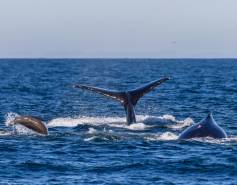
Read More{"image":"\/Animals\/Wild\/Humpback whale\/cropped-images\/humpback-whale-sea-lions-photo-c-bill-hunnewell-102-0-1270-992-1743014972.jpg","alt":"A California sea lion jumps out of the ocean next to a humpback whale showing its tail and another whale showing its back.","title":"What is the Loudest Animal on Earth? And Other Animal Trivia","link_url":"https:\/\/www.marinemammalcenter.org\/news\/what-is-the-loudest-animal-on-earth-and-other-animal-trivia","label":"News Update","date":"2025-03-26 07:00:00"}
{"image":"\/Animals\/Patients\/California sea lions\/2024\/csl-autumn-photo-by-chris-deimler-c-the-marine-mammal-center.jpg","alt":"A California sea lion with a small satellite tag on its back walks on a rocky beach toward the ocean.","title":"From Treating Sick Sea Lions to Tracking Them in the Wild: Follow Autumn","link_url":"https:\/\/www.marinemammalcenter.org\/news\/from-treating-sick-sea-lions-to-tracking-them-in-the-wild-follow-autumn","label":"Patient Update","date":"2025-02-27 15:23:46"}
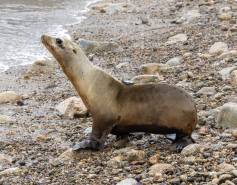
From Treating Sick Sea Lions to Tracking Them in the Wild: Follow Autumn
February 27, 2025
Read More{"image":"\/Misc\/cropped-images\/leashed-dog-on-beach-shutterstock-10-10-5572-4352-1696014237.jpg","alt":"a golden retriever lying on a sandy beach with a leash and harness","title":"How to Keep Your Dog Safe on Beaches","link_url":"https:\/\/www.marinemammalcenter.org\/news\/how-to-keep-your-dog-safe-on-beaches","label":"News Update","date":"2023-09-29 02:00:00"}