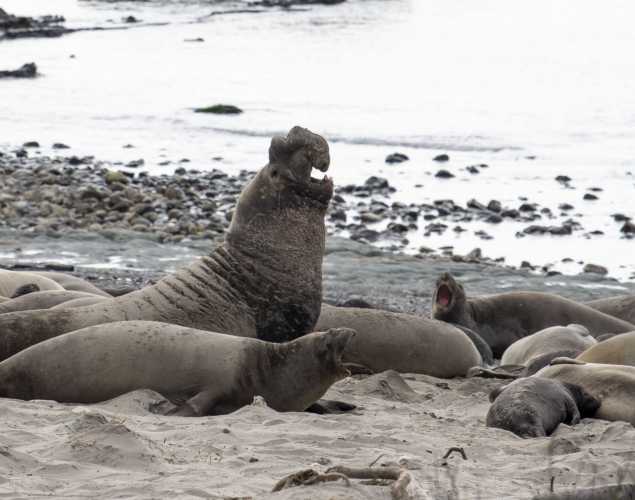
Avian Influenza Confirmed in Northern Elephant Seals
Update April 7, 2026:
A few weeks ago, we made the difficult decision to pause seal rescue operations along our expansive California range in order to protect our staff, volunteers and current patients. We are pleased to report that we are reopening these operations this week.
To prioritize health and safety, we are taking a phased approach, initially reopening seal rescue operations in our Monterey and San Luis Obispo areas. We will resume seal response operations in our northern range as soon as we can do so safely for both people and animals.
As of April 2, scientists have confirmed cases of avian flu in 36 northern elephant seals, three California sea lions and one southern sea otter, all of which were in San Mateo, Santa Cruz and San Luis Obispo counties.
Our hearts go out to all the animals that have been affected and to the dedicated organizations up and down the California coast that have spent decades studying and caring for them.
Animal welfare is at the heart of our mission, and we share the public’s deep concern for the health and welfare of marine mammals across our range. We are doing everything we can to respond quickly to the evolving dynamics of this outbreak while keeping both human safety and animal welfare at the forefront.
The Center continues to test all incoming animals for influenza and has had no positive cases among our patients to date.
This is an incredibly challenging time, and we understand how distressing it can be to encounter a sick animal on the beach.
Recently, scientists confirmed that a small number of young northern elephant seals at Año Nuevo State Park tested positive for highly pathogenic avian influenza (H5N1), also known as bird flu.
This is the first time H5N1 has been detected in California’s marine mammal population, and the first time it has been detected in northern elephant seals.
This development is especially concerning because the disease caused mass die-offs in a closely related species, southern elephant seals, during an outbreak in Argentina in 2023. That event showed how quickly this disease can spread through vulnerable marine mammal populations, underscoring the urgency of early detection, close monitoring and rapid response.
While most of the northern elephant seal colony appears healthy, experts are closely monitoring the situation in California to understand potential impacts and how it may affect marine mammals along our coast.
The Marine Mammal Center is working alongside leading partners including NOAA, UC Davis, UC Santa Cruz, California Department of Fish and Wildlife, and California Department of Public Health to monitor wildlife health and guide a coordinated, science-based response. As of March 16, 2026, we have not identified any confirmed cases in patients currently receiving care at our hospital.
What this means for people and pets
The risk of H5N1 to the public remains very low. The most important thing you can do is help protect yourself and marine mammals by:
- Staying at least 150 feet away from seals and other marine mammals
- Never touching live or dead wildlife
- Keeping dogs leashed on or near beaches
- Reporting sick or injured marine mammals to our hotline at 415-289-SEAL (7325)
What happens next
Our scientists and our partners are actively monitoring seal populations, testing samples, and tracking the situation closely. Early detection like this allows us to respond quickly, protect vulnerable animals, and better understand emerging ocean health threats.
How you can help right now
Responding to emerging wildlife health threats requires specialized medical care, diagnostic testing, protective equipment, and round-the-clock monitoring. Your support makes this work possible.
Your gift today helps us:
- Provide life-saving care to sick and injured marine mammals
- Detect and respond to emerging diseases quickly
- Protect the health of marine mammals and our shared ocean
- Advance research that benefits wildlife worldwide
Learn More About Our Work Protecting Marine Mammals


Yes, I want to save a life!
You’ll be giving sick and injured animals the best possible care at the Center’s state-of-the-art hospital. With your gift today, you are giving a patient a second chance at life in the wild.
See Our Latest News
{"image":"\/Animals\/Wild\/Humpback whale\/humpback-whale-spout-by-bill-hunnewell-c-the-marine-mammal-center.jpg","alt":"Humpback whale spout","title":"A Collaboration to Protect Whales and Support California\u2019s Dungeness Crab Fishery","link_url":"https:\/\/www.marinemammalcenter.org\/news\/collaboration-to-protect-whales-and-support-californias-dungeness-crab-fishery","label":"Press Release","date":"2026-10-22 02:00:00"}
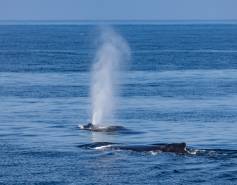
A Collaboration to Protect Whales and Support California’s Dungeness Crab Fishery
October 22, 2026
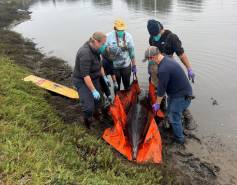
Read More{"image":"\/People\/Action\/Response\/cropped-images\/c-common-dolphin93026cuesta-inlet-in-morro-bayphoto-c-the-marine-mammal-center-noaa-mmhsrp-24359-0-399-1270-992-1790883642.jpg","alt":"Stranded dolphin response","title":"Three Common Dolphins Freed from Mudflats in Morro Bay","link_url":"https:\/\/www.marinemammalcenter.org\/news\/three-common-dolphins-freed-from-mudflats-in-morro-bay","label":"News Update","date":"2026-10-02 02:00:00"}
{"image":"\/Animals\/Wild\/Humpback whale\/cropped-images\/a-humpback-whalesf-bay91526photo-by-norely-faz-c-the-marine-mammal-center-noaa-permit-26532-772-1-1270-992-1789760973.png","alt":"Humpback whale Rio","title":"Humpback Whale \"Rio\" Spotted in the Sacramento-San Joaquin Delta","link_url":"https:\/\/www.marinemammalcenter.org\/news\/humpback-whale-rio-spotted-in-the-sacramento-san-joaquin-delta","label":"News Update","date":"2026-09-18 12:10:00"}
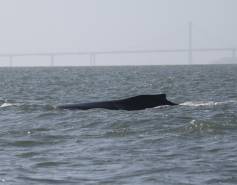
Humpback Whale "Rio" Spotted in the Sacramento-San Joaquin Delta
September 18, 2026
Read More{"image":"\/Animals\/Patients\/California sea lions\/2024\/d-california-sea-lionsin-treatment-for-domoic-acidsausalito72624photo-by-giancarlo-rulli-c-the-marine-mammal-center.jpg","alt":"California sea lions","title":"SF GATE: Sick, disoriented sea lions are washing up on California beaches","link_url":"https:\/\/www.marinemammalcenter.org\/news\/sf-gate-sick-disoriented-sea-lions-are-washing-up-on-california-beaches","label":"In the News","date":"2026-09-01 10:39:22"}
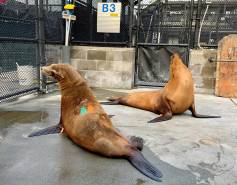
SF GATE: Sick, disoriented sea lions are washing up on California beaches
September 1, 2026
Read More