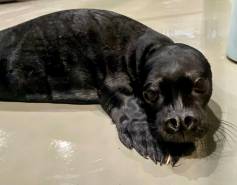
An Integrated Approach for Assessing Translocation as an Effective Conservation Tool for Hawaiian Monk Seals
- Species conservation
Abstract
For threatened and endangered species, translocations have been widely used to mitigate multiple sources of mortality that threaten population recovery. Although numerous Hawaiian monk seals Neomonachus schauinslandi have been translocated for a variety of purposes, few monk seal translocations have addressed the problem of prey limitation. To assess the efficacy of using translocations to mitigate reduced prey availability, 12 weanling monk seals were translocated with pre-release health screening and post-release monitoring. Specifically, the health, foraging behavior, habitat use, and survival of translocated seals were compared with those of 17 monk seals resident to the release site. There was little evidence of infectious diseases in translocated and resident seals, although Chlamydophila abortus antibodies and enteric bacteria were detected in many individuals. Translocated and resident weanling seals also demonstrated similar diving, movements, and habitat use, whereas resident adult seals had greater variability in foraging patterns. First-year survival for translocated weanlings (50 percent, n = 12) and non-translocated weanlings at the donor (31 percent, n = 36) and recipient sites (69 percent, n = 16) was related to weaning body size, with larger individuals having greater survivorship. These results supported three main conclusions that have important consequences for future translocation and population recovery efforts: (1) there was minimal risk of exposing seals to novel infectious diseases as a result of translocation; (2) individuals translocated with limited foraging experience rapidly adapted to their post-release environment; and (3) translocation for the purpose of mitigating prey limitation is a viable and important conservation tool for Hawaiian monk seals.
Norris, T.A., Littnan, C.L., Gulland, F.M.D., Baker, J.D., Harvey, J.T. 2017. An integrated approach for assessing translocation as an effective conservation tool for Hawaiian monk seals. Endangered Species Research. 32: 103-115.
Related Publications
{"image":"\/Animals\/Wild\/Other species\/Vaquita-Olson-NOAA.jpg","alt":"vaquita","title":"Protecting Critically Endangered Vaquita from Entanglement Through Field Capture","link_url":"https:\/\/www.marinemammalcenter.org\/publications\/protecting-critically-endangered-vaquita-from-entanglement-through-field-capture","label":"Research Paper"}
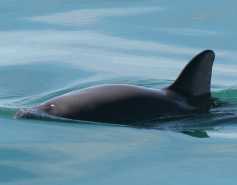
Protecting Critically Endangered Vaquita from Entanglement Through Field Capture
Read More{"image":"\/Animals\/Patients\/Guadalupe fur seals\/2020\/cropped-images\/gfs-pippin-by-bill-hunnewell-c-the-marine-mammal-center-noaa-permit-18786-111-120-3738-2920-1602702191.jpg","alt":"Guadalupe fur seal Pippin","title":"Understanding the Impacts of Climate Change on Threatened Guadalupe Fur Seals","link_url":"https:\/\/www.marinemammalcenter.org\/publications\/understanding-the-impacts-of-climate-change-on-threatened-guadalupe-fur-seals","label":"Research Paper"}
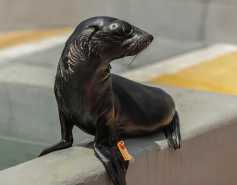
Understanding the Impacts of Climate Change on Threatened Guadalupe Fur Seals
Read More{"image":"\/Animals\/Wild\/Guadalupe fur seal\/cropped-images\/guadalupe-fur-seal-photo-c-marc-webber-113-2-3934-3072-1618437568.jpg","alt":"Guadalupe fur seal","title":"A New Guadalupe Fur Seal Colony in the Gulf of California?","link_url":"https:\/\/www.marinemammalcenter.org\/publications\/new-guadalupe-fur-seal-colony-in-the-gulf-of-california","label":"Research Paper"}
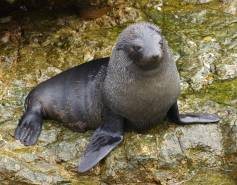
{"image":"\/Animals\/Patients\/Guadalupe fur seals\/2019\/cropped-images\/gfs-scooter-release-photo-c-steve-sayles-878-376-4402-3438-1606346089.jpg","alt":"Guadalupe fur seal","title":"Ecology and Conservation of Pinnipeds in Latin America: Guadalupe Fur Seal","link_url":"https:\/\/www.marinemammalcenter.org\/publications\/ecology-and-conservation-of-pinnipeds-in-latin-america-guadalupe-fur-seal","label":"Research Paper"}
Related News
{"image":"\/Animals\/Wild\/Sea otter\/cropped-images\/sea-otter-shutterstock-118-0-2496-1950-1604015482.jpg","alt":"sea otter eating clams","title":"What Do Sea Otters Eat? And Other Otter Trivia","link_url":"https:\/\/www.marinemammalcenter.org\/news\/what-do-sea-otters-eat-and-other-otter-trivia","label":"News Update","date":"2026-09-01 02:00:00"}
{"image":"\/Animals\/Patients\/Hawaiian monk seals\/2022\/hmsahonuireleasephoto-1-by-megan-ely-c-noaanoaa-permit-18786.png","alt":"Hawaiian monk seal release","title":"Take Action: Proposed Federal Regulation Would Weaken Scientific Funding and Integrity","link_url":"https:\/\/www.marinemammalcenter.org\/news\/take-action-proposed-federal-regulation-would-weaken-scientific-funding-and-integrity","label":"News Update","date":"2026-06-30 09:24:00"}
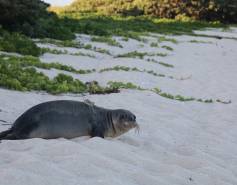
Take Action: Proposed Federal Regulation Would Weaken Scientific Funding and Integrity
June 30, 2026
Read More{"image":"\/Animals\/Wild\/Bottlenose dolphin\/cropped-images\/dolphinphoto-by-adam-li-c-noaa-0-0-1270-992-1769539954.jpg","alt":"A bottlenose dolphin jumps out of the water.","title":"What\u2019s the Difference Between Dolphins and Porpoises? And Other Animal Trivia","link_url":"https:\/\/www.marinemammalcenter.org\/news\/whats-the-difference-between-dolphins-and-porpoises-and-other-animal-trivia","label":"News Update","date":"2026-01-26 23:00:00"}
What’s the Difference Between Dolphins and Porpoises? And Other Animal Trivia
January 26, 2026
Read More{"image":"\/Animals\/Patients\/Hawaiian monk seals\/2025\/cropped-images\/b-ru72admission-to-ke-kai-ola112125photo-c-the-marine-mammal-center-noaa-permit-24359-0-364-1270-992-1766095407.jpg","alt":"A newborn Hawaiian monk seal pup with a black coat in rehabilitative care.","title":"Newborn Hawaiian Monk Seal Pup Now Receiving Care","link_url":"https:\/\/www.marinemammalcenter.org\/news\/newborn-hawaiian-monk-seal-pup-now-receiving-care","label":"Patient Update","date":"2025-12-18 01:00:00"}