What’s the Difference Between Dolphins and Porpoises? And Other Animal Trivia
- Behavior
- Species conservation
- Natural history
How well do you know marine mammals? Test your knowledge with this trivia. Plus, see how you can be part of critical conservation efforts to protect these animals.
Ready to dive in? Click “Show More+” to reveal the answer and more fascinating facts about the ocean and marine mammals.
What’s the difference between dolphins and porpoises?
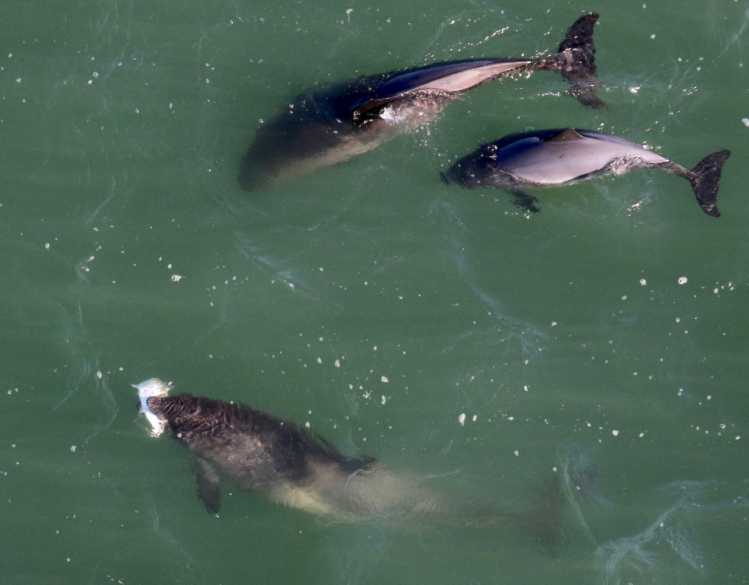
Marine mammals in the cetacean family include whales, dolphins and porpoises. While dolphins and porpoises are both types of toothed whales, they differ in their faces, fins and body shapes. Dolphins typically have a more elongated beak, cone-shaped teeth, and a hooked or curved dorsal fin. Porpoises have a more rounded beak, spade-shaped teeth and a triangular dorsal fin.
The Marine Mammal Center is a leading organization studying cetaceans, resulting in a robust collection of conservation data. Through boat-based and shore-based data collection, our researchers are compiling the first-ever humpback whale, gray whale, harbor porpoise and bottlenose dolphin photo-identification catalogs for the San Francisco Bay. This photo-identification research allows us to better understand human impacts on cetaceans, inform proactive solutions and take action to protect these animals.
Learn more about our cetacean research.
What’s the difference between seals and sea lions?
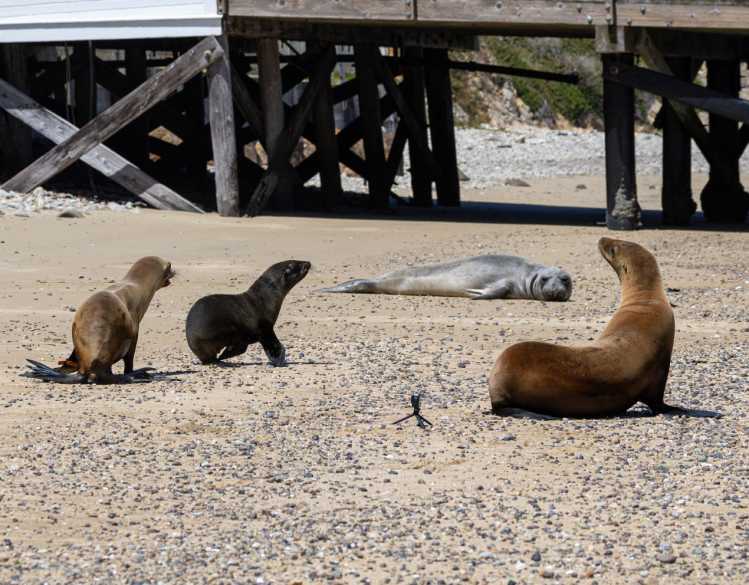
Seals and sea lions are both pinnipeds, which means they have front and rear flippers. While they may look similar at first glance, they are distinct families of animals with unique characteristics. They can most easily be identified by looking at their flippers and ears. Sea lions and fur seals, part of the otariid family, have large front flippers and external ear flaps. True seals in the phocid family have small front flippers and ear holes but no external ear flaps.
The Center rescues hundreds of seals and sea lions every year. At our hospital in Sausalito, California, our experts care for animals in the otariid family such as California sea lions, Steller sea lions, northern fur seals and threatened Guadalupe fur seals. Within the phocid family, we care for true seals including Pacific harbor seals and northern elephant seals. Through our hospital and conservation program based on Hawai‘i Island, Ke Kai Ola, we are also the lead responder for endangered Hawaiian monk seals.
Take a deep dive into the differences between seals and sea lions.
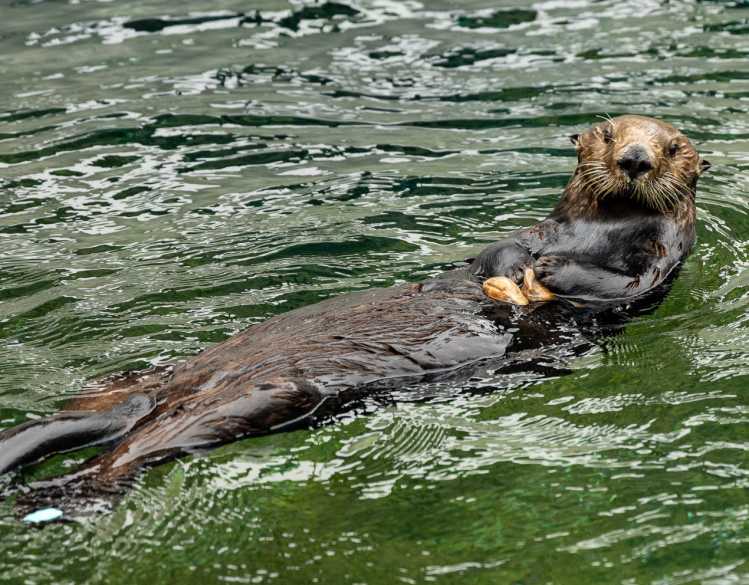
What’s the difference between sea otters and river otters?
Sea otters are marine mammals that live in the ocean and rarely leave the water. They have larger bodies, shorter and flattened tails, and often float on their backs in the water. River otters are semi-aquatic mammals that spend most of their time on land, typically only entering the water to hunt and travel. They have smaller bodies, longer and pointed tails, and swim with their bellies down.
Southern sea otters are a threatened species, and the survival of each individual otter is crucial to the future of this population. The Center is one of the few organizations permitted to rehabilitate southern sea otters. Using knowledge gained from treating sea otter patients at our hospital, we have expanded our understanding of health threats they face, which informs how we can better protect this population.
Learn more about our sea otter conservation efforts.
Enjoyed This Animal Trivia? Discover More Fun Facts and Activities


Yes, I want to save a life!
You’ll be giving sick and injured animals the best possible care at the Center’s state-of-the-art hospital. With your gift today, you are giving a patient a second chance at life in the wild.
See Our Latest News
{"image":"\/People\/Action\/Response\/cropped-images\/c-common-dolphin93026cuesta-inlet-in-morro-bayphoto-c-the-marine-mammal-center-noaa-mmhsrp-24359-0-399-1270-992-1790883642.jpg","alt":"Stranded dolphin response","title":"Three Common Dolphins Freed from Mudflats in Morro Bay","link_url":"https:\/\/www.marinemammalcenter.org\/news\/three-common-dolphins-freed-from-mudflats-in-morro-bay","label":"News Update","date":"2026-10-02 02:00:00"}

{"image":"\/Animals\/Wild\/Humpback whale\/cropped-images\/a-humpback-whalesf-bay91526photo-by-norely-faz-c-the-marine-mammal-center-noaa-permit-26532-772-1-1270-992-1789760973.png","alt":"Humpback whale Rio","title":"Humpback Whale \"Rio\" Spotted in the Sacramento-San Joaquin Delta","link_url":"https:\/\/www.marinemammalcenter.org\/news\/humpback-whale-rio-spotted-in-the-sacramento-san-joaquin-delta","label":"News Update","date":"2026-09-18 12:10:00"}
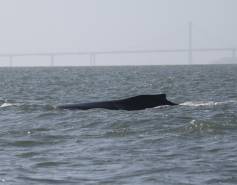
Humpback Whale "Rio" Spotted in the Sacramento-San Joaquin Delta
September 18, 2026
Read More{"image":"\/Animals\/Patients\/California sea lions\/2024\/d-california-sea-lionsin-treatment-for-domoic-acidsausalito72624photo-by-giancarlo-rulli-c-the-marine-mammal-center.jpg","alt":"California sea lions","title":"SF GATE: Sick, disoriented sea lions are washing up on California beaches","link_url":"https:\/\/www.marinemammalcenter.org\/news\/sf-gate-sick-disoriented-sea-lions-are-washing-up-on-california-beaches","label":"In the News","date":"2026-09-01 10:39:22"}
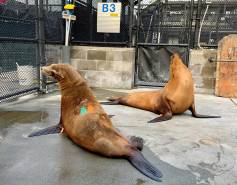
SF GATE: Sick, disoriented sea lions are washing up on California beaches
September 1, 2026
Read More{"image":"\/Animals\/Wild\/Sea otter\/cropped-images\/sea-otter-shutterstock-118-0-2496-1950-1604015482.jpg","alt":"sea otter eating clams","title":"What Do Sea Otters Eat? And Other Otter Trivia","link_url":"https:\/\/www.marinemammalcenter.org\/news\/what-do-sea-otters-eat-and-other-otter-trivia","label":"News Update","date":"2026-09-01 02:00:00"}