
Physiological Responses to Treating Malnutrition in Harbor Seal Pups
- Malnutrition
Abstract
Mammals with increased requirements for adipose tissue stores, such as marine mammals, have altered nutrient allocation priorities compared to many terrestrial mammals and thus the physiological response to undernutrition (low nutritional status) and realimentation (refeeding) may differ. Key regulators of nutrient allocation and tissue specific growth include metabolic hormones of the somatotropic axis, growth hormone (GH) and insulin-like growth factor (IGF)-I, as well as satiety and adipose promoting ghrelin and the stress hormone cortisol. Longitudinal measurements of metabolic hormones, blood metabolites, and morphometrics were collected over a 10-week period in twelve (male n = 3, female n = 9) harbor seal pups (< 6 weeks of age). Blood metabolites were used to indicate metabolic response during realimentation while morphometrics estimated tissue specific growth priorities. Harbor seal pups undergoing refeeding after nutritional deprivation show a preference for protein sparing despite severe malnutrition. Both BUN and total protein were negatively associated with GH and positively associated with IGF-I and ghrelin highlighting the importance of these metabolic hormones in the regulation of protein metabolism. While the response of the somatotropic axis to realimentation was typical of the mammalian pattern, the surprising increase of ghrelin across the study period suggests the priority of adipose accretion in addition to a possible mechanism regulating compensatory growth of vital adipose stores in a species, which prioritizes adipose accretion for survival.
Dailey, R.E., Smith, K., Fontaine, C., Jia, Y. and Avery, J.P., 2020. Response of metabolic hormones and blood metabolites to realimentation in rehabilitated harbor seal (Phoca vitulina) pups. Journal of Comparative Physiology B, pp.1-12
Related Publications
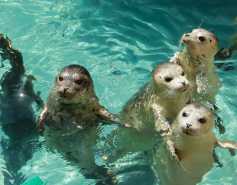
{"image":"\/Animals\/Patients\/Harbor seals\/hs-by-bill-hunnewell-c-the-marine-mammal-center-6.jpg","alt":"a group of harbor seals in the water","title":"Evaluating Whether Lactate Levels in the Blood Can Predict Recovery","link_url":"https:\/\/www.marinemammalcenter.org\/publications\/evaluating-whether-lactate-levels-in-the-blood-can-predict-recovery","label":"Research Paper"}
{"image":"\/Animals\/Wild\/Other species\/cropped-images\/orca-pod-shutterstock-691-0-4025-3143-1622591664.jpg","alt":"pod of killer whales surfacing","title":"Review of Research on Killer Whales to Detect Evidence of Poor Body Condition","link_url":"https:\/\/www.marinemammalcenter.org\/publications\/review-of-research-on-killer-whales-to-detect-evidence-of-poor-body-condition","label":"Research Paper"}

Review of Research on Killer Whales to Detect Evidence of Poor Body Condition
Read More{"image":"\/Animals\/Patients\/California sea lions\/2020\/cropped-images\/csl-boycrus-by-bill-hunnewell-c-the-marine-mammal-center-0-0-3110-2429-1603927870.jpg","alt":"California sea lion pup","title":"Intraperitoneal Dextrose Administration to Northern Fur Seal Pups in Hypoglycemic Crisis","link_url":"https:\/\/www.marinemammalcenter.org\/publications\/intraperitoneal-dextrose-administration-to-northern-fur-seal-pups-in-hypoglycemic-crisis","label":"Research Paper"}
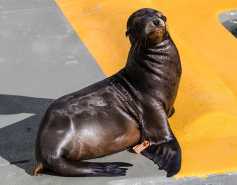
Intraperitoneal Dextrose Administration to Northern Fur Seal Pups in Hypoglycemic Crisis
Read More{"image":"\/Animals\/Patients\/Elephant seals\/2021\/cropped-images\/es-blonk-by-bill-hunnewell-c-the-marine-mammal-center-10-1-4168-3256-1616537077.jpg","alt":"northern elephant seal pup","title":"Endocrine Response to Realimentation in Young Northern Elephant Seals","link_url":"https:\/\/www.marinemammalcenter.org\/publications\/endocrine-response-to-realimentation-in-young-northern-elephant-seals","label":"Research Paper"}

Related News
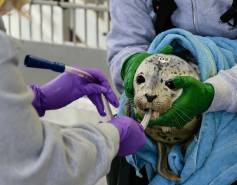
{"image":"\/Animals\/Patients\/Harbor seals\/2021\/cropped-images\/hs-meringue-photo-by-bill-hunnewell-c-the-marine-mammal-center-2-117-0-1270-992-1744225251.jpg","alt":"Animal care volunteers gently position a feeding tube into a harbor seal pup\u2019s mouth.","title":"How Seal Milk and \u201cFish Smoothies\u201d Help Pups Grow Strong","link_url":"https:\/\/www.marinemammalcenter.org\/news\/how-seal-milk-and-fish-smoothies-help-pups-grow-strong","label":"Patient Update","date":"2026-04-29 09:41:00"}
{"image":"\/Animals\/Patients\/California sea lions\/2026\/csl-irving-pre-rescue-in-san-francisco-photo-by-katie-young-c-the-marine-mammal-center.jpg","alt":"A California sea lion pup is stranded on a sidewalk in front of a car.","title":"Sea Lion Irving Rescued on a San Francisco Street","link_url":"https:\/\/www.marinemammalcenter.org\/news\/sea-lion-irving-rescued-on-a-san-francisco-street","label":"Patient Update","date":"2026-04-17 14:50:00"}

{"image":"\/Animals\/Wild\/Harbor seal\/cropped-images\/01-hslucinda2934releasephoto-by-john-beltran-c-the-marine-mammal-center-16-0-0-1270-992-1734387848.jpg","alt":"A Pacific harbor seal moves into the ocean.","title":"From Rescue to Release: Marine Mammal Patients Seen Thriving in the Wild","link_url":"https:\/\/www.marinemammalcenter.org\/news\/from-rescue-to-release-marine-mammal-patients-seen-thriving-in-the-wild","label":"Patient Update","date":"2024-12-17 12:06:08"}
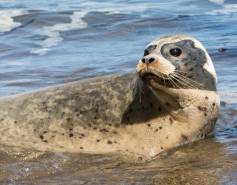
From Rescue to Release: Marine Mammal Patients Seen Thriving in the Wild
December 17, 2024
Read More{"image":"\/Animals\/Patients\/Harbor seals\/2024\/cropped-images\/hs-sandia-by-bill-hunnewell-c-the-marine-mammal-center-313-14-4124-3222-1713562157.jpg","alt":"A newborn seal pup with a fluffy lanugo coat looks up. ","title":"Pupping Season Spotlight: Caring for an Orphaned Harbor Seal Pup","link_url":"https:\/\/www.marinemammalcenter.org\/news\/pupping-season-spotlight-caring-for-an-orphaned-harbor-seal-pup","label":"Patient Update","date":"2024-04-22 02:00:00"}
Pupping Season Spotlight: Caring for an Orphaned Harbor Seal Pup
April 22, 2024
Read More