New Urban Habitat for Endangered Humpback Whales: San Francisco Bay
- Foraging
- Species conservation
- Natural history
Abstract
As populations of large whales recover from whaling, species that forage and breed in coastal waters, including the humpback whale (Megaptera novaeangliae), increasingly overlap with human activities. This represents a potential hazard in locations worldwide subject to intensive vessel traffic, including New York, Panama City and Brisbane.
Historically, humpback whales were not considered part of San Francisco Bay's fauna, except for a few ‘lost’ whales that wandered into the estuary.
An unprecedented influx of humpback whales into highly urbanized San Francisco Bay began in 2016. Research efforts in 2016–2018 from vessels and shore resulted in 496 photo-identification records plus 319 visual sightings. Sixty-one individuals were photo-identified, of which 80% (n = 49) used the bay on multiple days (range = 2 to 39), and 34% (n = 21) were resighted in successive years.
Whales photographed in San Francisco Bay were found to belong to distinct population segments listed as endangered and threatened under the U.S. Endangered Species Act.
Whales moved in and out of the bay seasonally (April–November). Habitat use patterns indicated movements farther into San Francisco Bay correlated positively with high tides.
Humpback whales were visually observed lunge feeding on northern anchovy (Engraulis mordax) at the surface. Analysis of dive patterns by three tagged whales confirmed subsurface feeding when surface feeding was not apparent.
The use of San Francisco Bay and adjacent waters by recovering populations of humpback whales exacerbates the potential for collisions with vessels, entanglement in fishing gear, and harassment by recreational vessels. The most pressing conservation concern is the risk of ship strikes, observed where humpback whales occur near active seaports.
Markowitz, T.M., Keener, W., Webber, M.A., Payne, A.R., Lane, R.S., Fahlbusch, J.A. and Calambokidis, J., 2024. New urban habitat for endangered humpback whales: San Francisco Bay. Aquatic Conservation: Marine and Freshwater Ecosystems, 34(3), p.e4107.
Meet The Experts
{"image":"\/People\/Portrait\/timothy-markowitz.jpg","alt":"Tim Markowitz","title":"Tim Markowitz","text":"Cetacean Field Research Associate","link_url":"https:\/\/www.marinemammalcenter.org\/person\/tim-markowitz","link_text":"Read Bio"}

{"image":"\/People\/Portrait\/cropped-images\/marc-webber-0-196-1204-940-1618436847.jpg","alt":"Marc Webber","title":"Marc Webber","text":"Cetacean Field Research Associate","link_url":"https:\/\/www.marinemammalcenter.org\/person\/marc-webber","link_text":"Read Bio"}
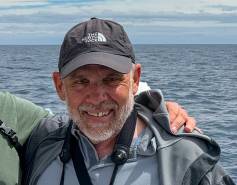
{"image":"\/People\/Portrait\/cropped-images\/bill-keener-0-0-3030-2314-1601930964.jpg","alt":"Bill Keener","title":"Bill Keener","text":"Cetacean Field Research Associate","link_url":"https:\/\/www.marinemammalcenter.org\/person\/bill-keener","link_text":"Read Bio"}
Related Publications
{"image":"\/Animals\/Wild\/Other species\/Vaquita-Olson-NOAA.jpg","alt":"vaquita","title":"Protecting Critically Endangered Vaquita from Entanglement Through Field Capture","link_url":"https:\/\/www.marinemammalcenter.org\/publications\/protecting-critically-endangered-vaquita-from-entanglement-through-field-capture","label":"Research Paper"}
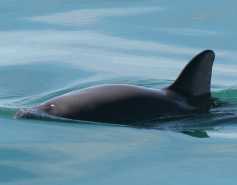
Protecting Critically Endangered Vaquita from Entanglement Through Field Capture
Read More{"image":"\/Animals\/Patients\/Guadalupe fur seals\/2020\/cropped-images\/gfs-pippin-by-bill-hunnewell-c-the-marine-mammal-center-noaa-permit-18786-111-120-3738-2920-1602702191.jpg","alt":"Guadalupe fur seal Pippin","title":"Understanding the Impacts of Climate Change on Threatened Guadalupe Fur Seals","link_url":"https:\/\/www.marinemammalcenter.org\/publications\/understanding-the-impacts-of-climate-change-on-threatened-guadalupe-fur-seals","label":"Research Paper"}
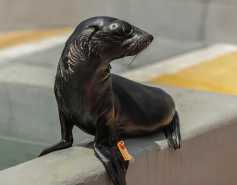
Understanding the Impacts of Climate Change on Threatened Guadalupe Fur Seals
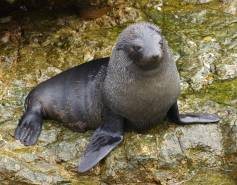
Read More{"image":"\/Animals\/Wild\/Guadalupe fur seal\/cropped-images\/guadalupe-fur-seal-photo-c-marc-webber-113-2-3934-3072-1618437568.jpg","alt":"Guadalupe fur seal","title":"A New Guadalupe Fur Seal Colony in the Gulf of California?","link_url":"https:\/\/www.marinemammalcenter.org\/publications\/new-guadalupe-fur-seal-colony-in-the-gulf-of-california","label":"Research Paper"}
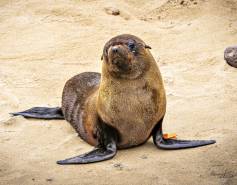
{"image":"\/Animals\/Patients\/Guadalupe fur seals\/2019\/cropped-images\/gfs-scooter-release-photo-c-steve-sayles-878-376-4402-3438-1606346089.jpg","alt":"Guadalupe fur seal","title":"Ecology and Conservation of Pinnipeds in Latin America: Guadalupe Fur Seal","link_url":"https:\/\/www.marinemammalcenter.org\/publications\/ecology-and-conservation-of-pinnipeds-in-latin-america-guadalupe-fur-seal","label":"Research Paper"}
Related News
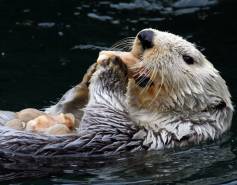
{"image":"\/Animals\/Wild\/Sea otter\/cropped-images\/sea-otter-shutterstock-118-0-2496-1950-1604015482.jpg","alt":"sea otter eating clams","title":"What Do Sea Otters Eat? And Other Otter Trivia","link_url":"https:\/\/www.marinemammalcenter.org\/news\/what-do-sea-otters-eat-and-other-otter-trivia","label":"News Update","date":"2026-09-01 02:00:00"}
{"image":"\/Animals\/Patients\/Hawaiian monk seals\/2022\/hmsahonuireleasephoto-1-by-megan-ely-c-noaanoaa-permit-18786.png","alt":"Hawaiian monk seal release","title":"Take Action: Proposed Federal Regulation Would Weaken Scientific Funding and Integrity","link_url":"https:\/\/www.marinemammalcenter.org\/news\/take-action-proposed-federal-regulation-would-weaken-scientific-funding-and-integrity","label":"News Update","date":"2026-06-30 09:24:00"}
Take Action: Proposed Federal Regulation Would Weaken Scientific Funding and Integrity
June 30, 2026
Read More{"image":"\/Animals\/Wild\/Bottlenose dolphin\/cropped-images\/dolphinphoto-by-adam-li-c-noaa-0-0-1270-992-1769539954.jpg","alt":"A bottlenose dolphin jumps out of the water.","title":"What\u2019s the Difference Between Dolphins and Porpoises? And Other Animal Trivia","link_url":"https:\/\/www.marinemammalcenter.org\/news\/whats-the-difference-between-dolphins-and-porpoises-and-other-animal-trivia","label":"News Update","date":"2026-01-26 23:00:00"}
What’s the Difference Between Dolphins and Porpoises? And Other Animal Trivia
January 26, 2026
Read More{"image":"\/Animals\/Patients\/Hawaiian monk seals\/2025\/cropped-images\/b-ru72admission-to-ke-kai-ola112125photo-c-the-marine-mammal-center-noaa-permit-24359-0-364-1270-992-1766095407.jpg","alt":"A newborn Hawaiian monk seal pup with a black coat in rehabilitative care.","title":"Newborn Hawaiian Monk Seal Pup Now Receiving Care","link_url":"https:\/\/www.marinemammalcenter.org\/news\/newborn-hawaiian-monk-seal-pup-now-receiving-care","label":"Patient Update","date":"2025-12-18 01:00:00"}