
Potential Infanticide Attempt of Common Bottlenose Dolphins on a Young Calf in a Tropical Caribbean Atoll
- Behavior
Abstract
Infanticidal behavior (i.e., the intentional killing of young) is common in the animal kingdom. Common bottlenose dolphins (Tursiops truncatus) engage extensively in intraspecific agonistic behaviors, and infanticidal behavior has been documented in many dolphin populations. However, these behaviors remain poorly understood in dolphins as descriptions of these events remain rare. Here, we report on an event involving agonistic intraspecific behavior of multiple bottlenose dolphins directed towards of a young calf at Turneffe Atoll, Belize. Boat-based surface observations, brief surface video, and photo analysis were used to identify individual dolphins. All dolphins were confirmed as part-time and long-term residents by matching dorsal fins to the long-term photo-ID catalog of local dolphins. Multiple dolphins displayed agonistic and likely injurious behavior towards the calf, including ramming and flipping it into the air and forcefully submerging it. Vocalizations recorded in surface video (whistles and burst-pulses) coincided with calf surface times. The repetition of a downsweeping contour was possibly associated with its distress.
Ramos, E.A., Szczepaniak, I.D., Kaplan, J.D. and Reiss, D., 2022. Potential Infanticide Attempt of Common Bottlenose Dolphins (Tursiops truncatus) on a Young Calf in a Tropical Caribbean Atoll. Aquatic Mammals, 48(2), pp.132-141.
Related Publications
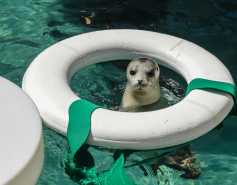
{"image":"\/Animals\/Patients\/Harbor seals\/hs-by-bill-hunnewell-c-the-marine-mammal-center.jpg","alt":"harbor seal in a life preserver enrichment item","title":"Enrichment as a Tool for Rehabilitating Harbor Seals","link_url":"https:\/\/www.marinemammalcenter.org\/publications\/enrichment-as-a-tool-for-rehabilitating-harbor-seals","label":"Research Paper"}
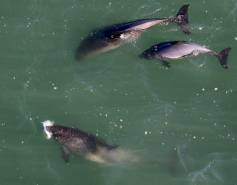
{"image":"\/Animals\/Wild\/Harbor porpoise\/cropped-images\/harbor-porpoises-foraging-by-marc-webber-c-the-marine-mammal-center-4-0-1276-996-1618438446.jpg","alt":"harbor porpoises eating a large fish","title":"Prey-Related Suffocation in Harbor Porpoises","link_url":"https:\/\/www.marinemammalcenter.org\/publications\/prey-related-suffocation-in-harbor-porpoises","label":"Research Paper"}
{"image":"\/Animals\/Wild\/Harbor porpoise\/cropped-images\/harbor-porpoises-aerial-view-badge-by-marc-webber-c-the-marine-mammal-center-0-88-1280-999-1618509985.jpg","alt":"Harbor porpoises seen from above","title":"Coevolution of Asymmetric and Spiraled Genitalia with Unique Mating Behavior","link_url":"https:\/\/www.marinemammalcenter.org\/publications\/coevolution-of-asymmetric-and-spiraled-genitalia-with-unique-mating-behavior","label":"Research Paper"}

Coevolution of Asymmetric and Spiraled Genitalia with Unique Mating Behavior
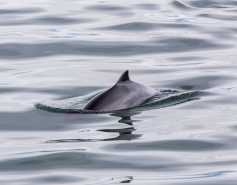
Read More{"image":"\/Animals\/Wild\/Harbor porpoise\/harbor-porpoise-shutterstock-2.jpg","alt":"harbor porpoise","title":"Harbor Porpoises Catching and Handling Large Fish","link_url":"https:\/\/www.marinemammalcenter.org\/publications\/harbor-porpoises-catching-and-handling-large-fish","label":"Research Paper"}
Related News
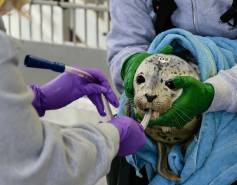
{"image":"\/Animals\/Patients\/Harbor seals\/2021\/cropped-images\/hs-meringue-photo-by-bill-hunnewell-c-the-marine-mammal-center-2-117-0-1270-992-1744225251.jpg","alt":"Animal care volunteers gently position a feeding tube into a harbor seal pup\u2019s mouth.","title":"How Seal Milk and \u201cFish Smoothies\u201d Help Pups Grow Strong","link_url":"https:\/\/www.marinemammalcenter.org\/news\/how-seal-milk-and-fish-smoothies-help-pups-grow-strong","label":"Patient Update","date":"2026-04-29 09:41:00"}
{"image":"\/Animals\/Wild\/Gray whale\/cropped-images\/two-gray-whales-golden-gate-bridge-shutterstock-0-0-1270-992-1770234810.jpg","alt":"two gray whales under the Golden Gate Bridge","title":"The Marine Mammal Center and San Francisco Harbor Safety Committee Pilot New Vessel Operator Training Program","link_url":"https:\/\/www.marinemammalcenter.org\/news\/the-marine-mammal-center-and-san-francisco-harbor-safety-committee-pilot-new-vessel-operator-training-program","label":"Press Release","date":"2026-02-06 01:00:00"}
The Marine Mammal Center and San Francisco Harbor Safety Committee Pilot New Vessel Operator Training Program
February 6, 2026
Read More{"image":"\/Animals\/Wild\/Bottlenose dolphin\/cropped-images\/dolphinphoto-by-adam-li-c-noaa-0-0-1270-992-1769539954.jpg","alt":"A bottlenose dolphin jumps out of the water.","title":"What\u2019s the Difference Between Dolphins and Porpoises? And Other Animal Trivia","link_url":"https:\/\/www.marinemammalcenter.org\/news\/whats-the-difference-between-dolphins-and-porpoises-and-other-animal-trivia","label":"News Update","date":"2026-01-26 23:00:00"}
What’s the Difference Between Dolphins and Porpoises? And Other Animal Trivia
January 26, 2026
Read More{"image":"\/Animals\/Wild\/Hawaiian monk seal\/cropped-images\/hms-wild-photo-1-c-noaa-pifsc-hmsrp-35-0-1270-992-1759760452.jpg","alt":"A Hawaiian monk seal rests on its side on a sandy beach.","title":"Where Do Hawaiian Monk Seals Live? And Other \u2018\u012alio Holo I Ka Uaua Trivia","link_url":"https:\/\/www.marinemammalcenter.org\/news\/where-do-hawaiian-monk-seals-live-and-other-ilio-holo-i-ka-uaua-trivia","label":"News Update","date":"2025-10-06 00:00:00"}
Where Do Hawaiian Monk Seals Live? And Other ‘Īlio Holo I Ka Uaua Trivia
October 6, 2025
Read More