Training College Students in Marine Mammal Health
- Marine science careers
- Education
The Marine Mammal Center and California Polytechnic State University, San Luis Obispo, are celebrating 10 years of offering our collaborative marine mammal health course for undergraduate students. Learn about this dynamic program and see how alumni are continuing to make a difference as ocean stewards.
Marine Mammal Health Enterprise
The Marine Mammal Center is the largest teaching hospital of its kind, hosting emerging animal health and welfare professionals from around the world who come to train alongside our renowned experts. We combine high-quality marine mammal care with hands-on learning experiences, where students can develop fundamental skills and knowledge to have far-reaching impacts on ocean health.
As part of our Teaching Hospital, the Center has a longstanding professional partnership with California Polytechnic State University, San Luis Obispo (Cal Poly) to offer our Marine Mammal Health Enterprise course for undergraduate students. Cal Poly’s motto of “learn by doing" is a natural fit with our Teaching Hospital model.
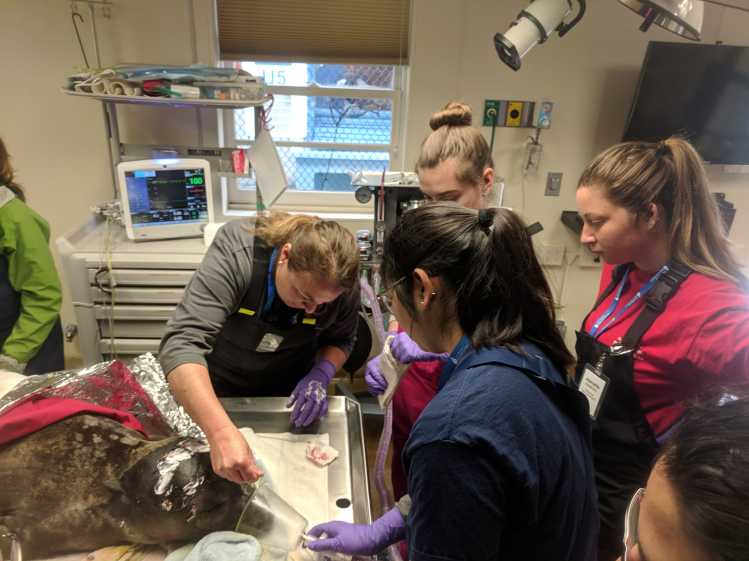
This collaborative course was developed and is led by Dr. Heather Harris, associate veterinarian at the Center and faculty member at Cal Poly, as well as an alum of our Teaching Hospital. It's passionate mentors and marine mammal experts like Dr. Harris who make the Center a world-class teaching hospital.
“I want to emphasize how profoundly Dr. Harris impacts her students,” says Kate Fitzgerald, an alum of the Marine Mammal Health Enterprise. “She is a charismatic, strong and brilliant leader, and the Enterprise reflects her high standards and deep commitment to student development.”
Each year, our Marine Mammal Health Enterprise provides opportunities for Cal Poly students to learn both in the classroom and directly with marine mammals. Enrollment in this competitive upper-division capstone course is by application only. The coursework is rigorous, covering in-depth topics such as marine mammal biology, natural history, emerging diseases, population monitoring, unusual mortality events and more. Through patient case studies and necropsies (animal autopsies), students gain unique insights by studying the animals at our hospital.
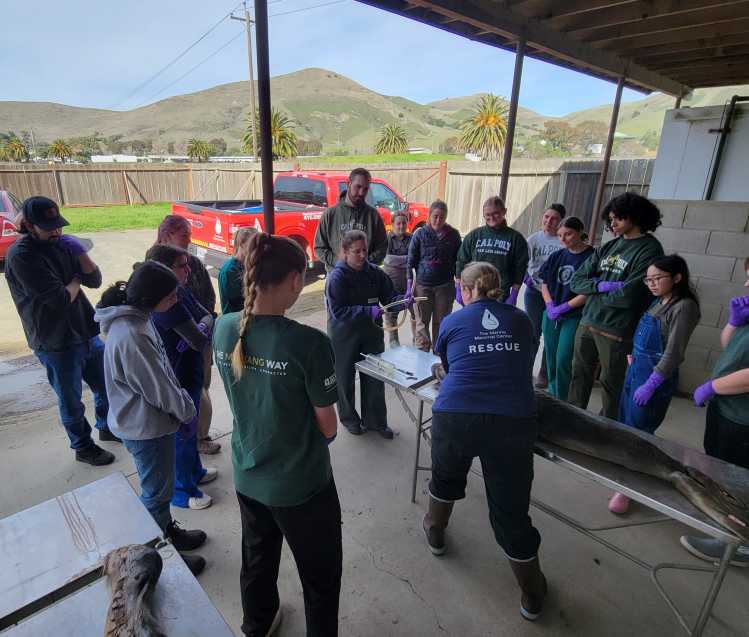
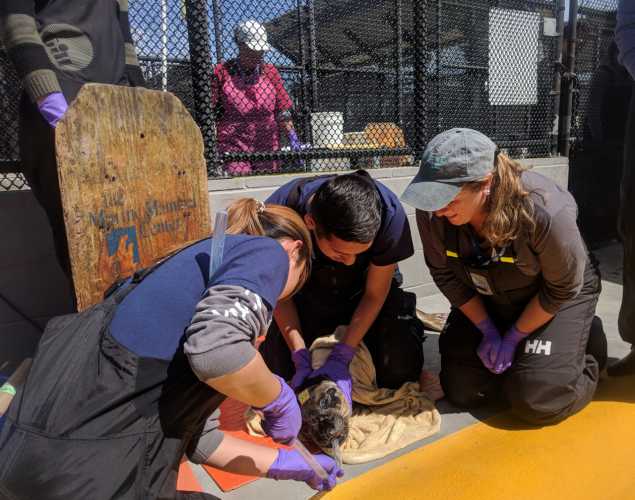
Along with participating in the lectures and labs, students become trained volunteers at our San Luis Obispo Operations triage facility for the two quarters, or six months, of the course. They work closely with our staff and volunteer crew supervisors to simultaneously gain valuable professional development experience and bolster the Center’s response and animal care capacity. Many students are inspired to continue their training as volunteers after the course has ended as well.
Reflecting on her animal care training, Kate Fitzgerald shares her experience of learning to administer an intramuscular injection for a 170-pound sea lion. Initially, she missed the ideal injection site. The animal was safe, but Kate was motivated to learn this important clinical skill. Her volunteer crew supervisor encouraged her to try again the next day, providing a hands-on learning opportunity and helping Kate gain confidence to face challenges.
“I was nervous, but I knew I could do it. I went in, trusted my training, and gave the injection correctly, with confidence and precision,” Kate says. “It was such a meaningful moment for me, one of those experiences where you feel the weight of growth. I walked away proud, not just because I got it right, but because I got in there and tried again.”
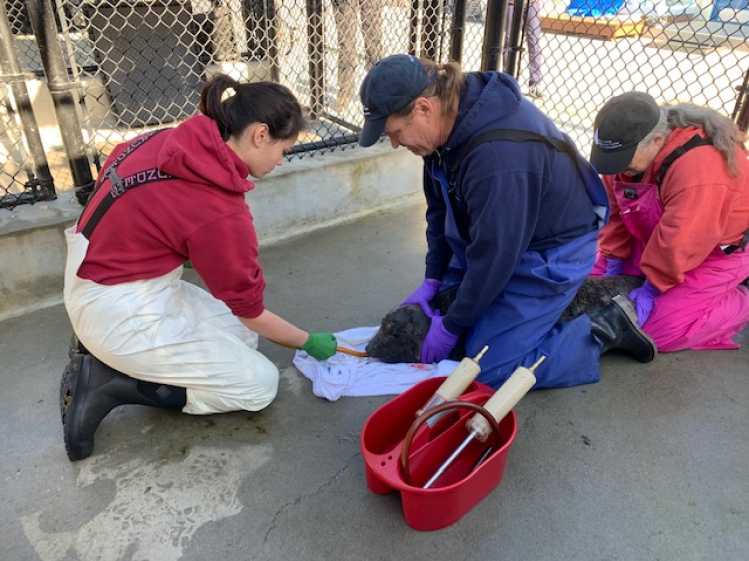
As volunteers, our Marine Mammal Health Enterprise students support all aspects of the Center’s work from rescue to rehabilitation to release. Duties include fielding calls from the public, rescuing and transporting sick and injured animals, preparing food and feeding patients, cleaning pens and equipment, administering medications, and assisting with releases. They also become trained oiled wildlife responders through the Center’s affiliation with the Oiled Wildlife Care Network.
Protecting Animal, Human and Environmental Health
The Center has rescued more than 27,000 marine mammals, and each patient provides a window into ocean changes that affect all life on Earth. In working with marine mammals, students learn more about how animal health is deeply connected to the health of people and our shared ocean environment. We are guided by this approach to conservation, also known as One Health.
Dr. Harris encourages Cal Poly students from diverse backgrounds and a variety of scientific majors to apply for the Marine Mammal Health Enterprise and grow as ocean stewards and One Health advocates. As we celebrate 10 years of providing this course, more than 150 students have benefited from this experiential learning opportunity. Many alumni are having significant impacts on our ocean as early-career scientists spanning human, animal and environmental health.
Alumni Testimonials and Experiences
“Out of all the work I do as a wildlife veterinarian, teaching the next generation is the most rewarding,” says Dr. Harris. “The students reinvigorate me. They make me enthusiastic and hopeful about the future.”
See below how students and alumni are applying their learning experiences at the Center and working toward building a better future for ocean health.
One Health in Veterinary Care
Brenna Eikenbary joined our Cal Poly Marine Mammal Health Enterprise in 2018 after first participating in the Center’s Youth Crew program for high school students. In 2019 she became a teaching assistant for the Enterprise course while also providing leadership at the Center as a volunteer crew supervisor.
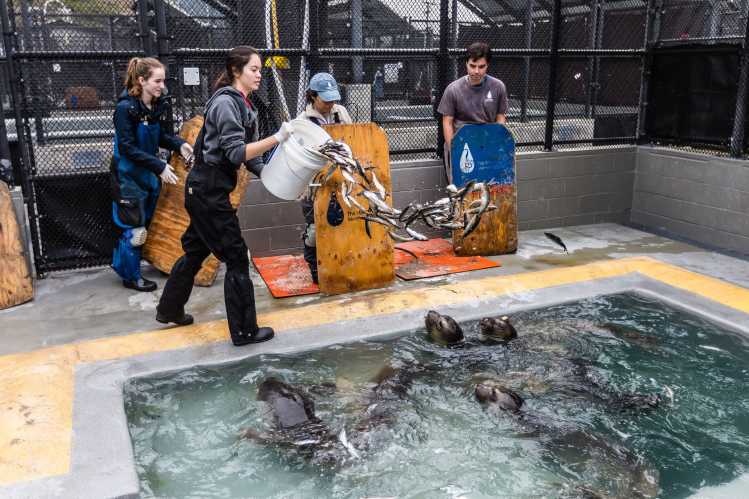
“The Marine Mammal Center played such an incredible role in exposing me to One Health and allowing me to take on leadership roles early on,” Brenna says. “I loved every day I got to spend at the Center, and I learned so much from the incredible people on my crew and the amazing staff.”
Brenna earned her Bachelor of Science in Animal Science with honors in just three years and received an outstanding senior award and college-wide senior recognition for community service. Brenna then spent time exploring human health to integrate a stronger One Health perspective as a future veterinarian. She worked as an Americorps Fellow in public health during the COVID-19 pandemic and earned her Master of Science in Global Health from Georgetown University, focusing on the political, social, cultural, and economic components of zoonotic disease outbreak and management in rural India. During these experiences, she became particularly interested in understanding wildlife disease spillover (how diseases are transmitted from animals to humans).
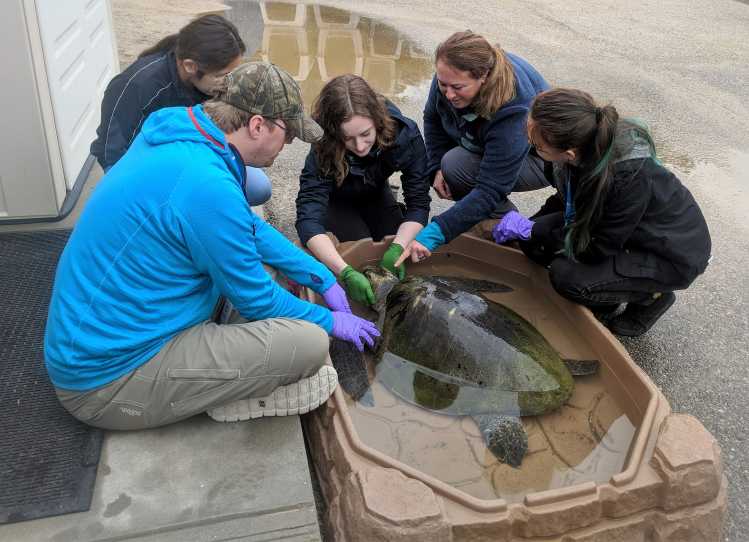
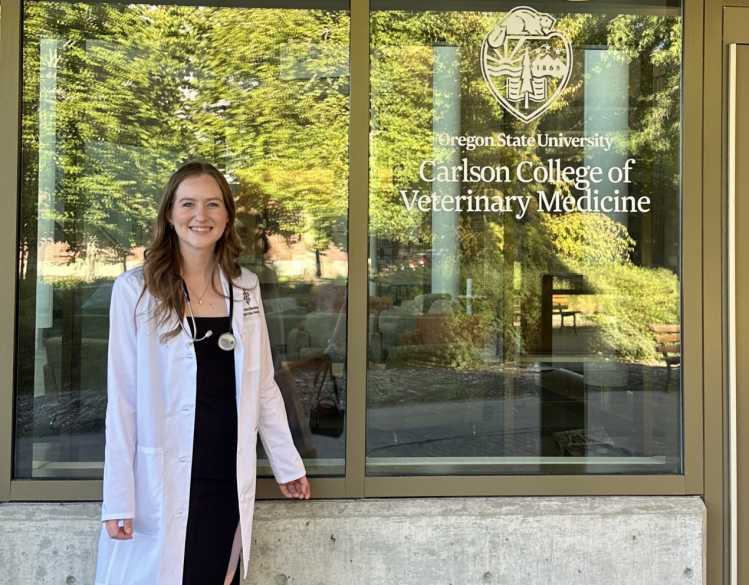
Now as a veterinary student at Oregon State University, Brenna is studying harmful algal blooms and the marine biotoxins they produce such as domoic acid, which impacts animals, people and our shared ocean environment. She is working closely with Dr. Harris on this research to better understand how domoic acid may be impacting sea turtles. “I am hoping to continue to work in the One Health space throughout my career and to do research like this about the incredible species I had the chance to work with at the Center,” Brenna says.
Ocean Law and Policy
Kate Fitzgerald participated in our Marine Mammal Health Enterprise as a Cal Poly undergraduate student in 2020, became a teaching assistant for the course in 2021 in a virtual classroom environment during the pandemic, and did an internship with the Center as a Cal Poly marine scholar focusing on marine mammal strandings. Kate’s experience in the Enterprise course provided hands-on professional training, opened fellowship opportunities, played a major role in helping her gain admission to her master’s program, and connected her with mentors and colleagues who have continued to influence her career.
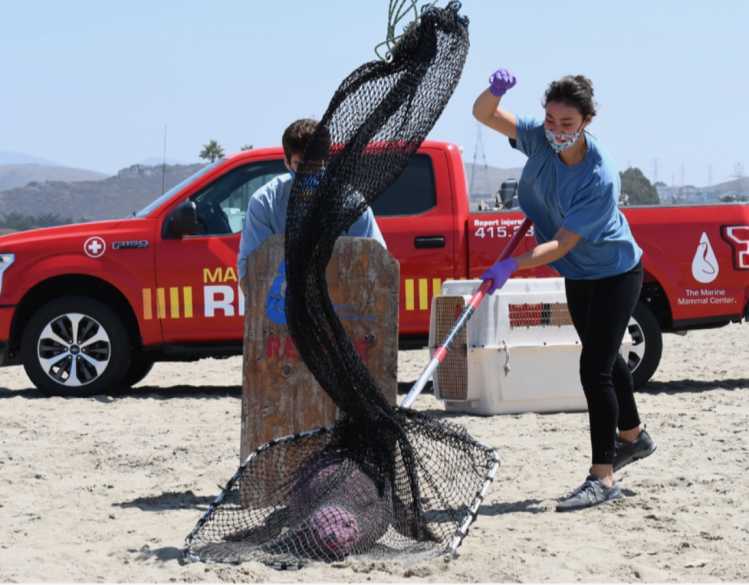
After earning her Bachelor of Science in Marine Science, Kate began working in animal husbandry through an Ocean Health Fellowship at the Pacific Marine Mammal Center. She later earned her Master of Advanced Studies in Marine Biodiversity and Conservation at Scripps Institution of Oceanography.
While Kate valued the clinical side of animal health, her master’s program also sparked a growing interest in ocean governance and fisheries management. “I’m a firm believer that one of the most effective ways to drive environmental progress is through strong, well-designed laws and regulations—and I knew I wanted to be part of that process,” she says.
After graduation, Kate began working as the Program Operations Manager for a community benefit program in seafood systems, working directly with the fishing community, creating educational resources, managing communications, and connecting buyers with local, sustainable seafood. She also serves as a teaching assistant for the Ocean Law and Policy course at Scripps. Now with an exciting new professional opportunity as a John A. Knauss Sea Grant Marine Policy Fellow, Kate is planning to move to Washington, D.C. to pursue her career in ocean law and policy.
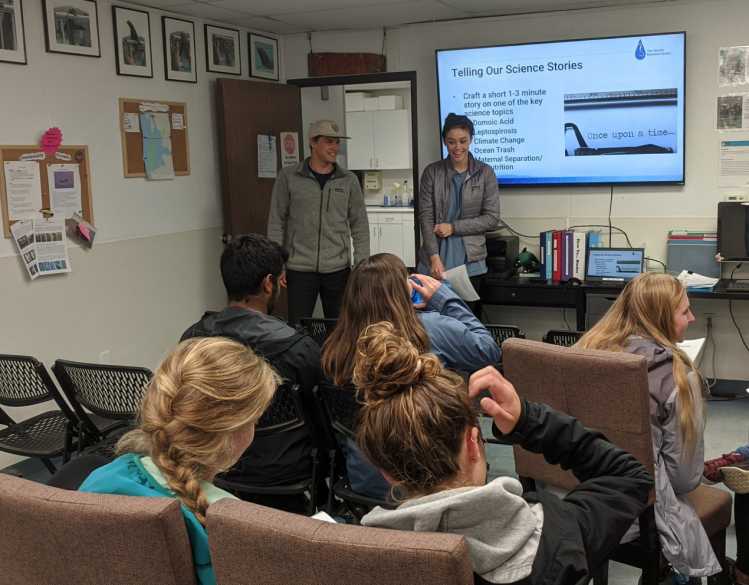
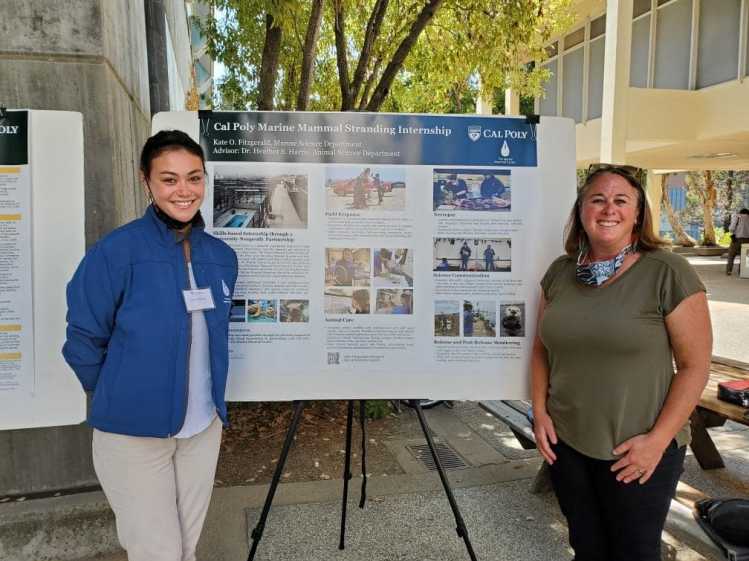
To this day, Kate draws from her learning experiences at the Center and the rewarding and challenging moments of rehabilitating marine mammals. “I can confidently say I wouldn’t be where I am today without Dr. Heather Harris and the Cal Poly Marine Mammal Health Enterprise,” Kate says. “The Center shaped my professional path, my confidence, and my commitment to protecting marine ecosystems—and I am deeply grateful for that foundation.”
Your Support Makes This Possible
The Center’s Teaching Hospital is a crucial training ground for the next generation of animal health and welfare professionals. And by working closely with our academic partners like Cal Poly, we are expanding our impact for more students to grow as ocean stewards.
Caring people like you make this possible. It’s thanks to your support students can train alongside our experts, participate in hands-on learning opportunities, and ultimately apply their experiences to create a healthier ocean for animals and people alike.
Learn More About Our Impact


Yes, I want to save a life!
You’ll be giving sick and injured animals the best possible care at the Center’s state-of-the-art hospital. With your gift today, you are giving a patient a second chance at life in the wild.
See Our Latest News
{"image":"\/People\/Action\/Response\/cropped-images\/c-common-dolphin93026cuesta-inlet-in-morro-bayphoto-c-the-marine-mammal-center-noaa-mmhsrp-24359-0-399-1270-992-1790883642.jpg","alt":"Stranded dolphin response","title":"Three Common Dolphins Freed from Mudflats in Morro Bay","link_url":"https:\/\/www.marinemammalcenter.org\/news\/three-common-dolphins-freed-from-mudflats-in-morro-bay","label":"News Update","date":"2026-10-02 02:00:00"}
{"image":"\/Animals\/Wild\/Humpback whale\/cropped-images\/a-humpback-whalesf-bay91526photo-by-norely-faz-c-the-marine-mammal-center-noaa-permit-26532-772-1-1270-992-1789760973.png","alt":"Humpback whale Rio","title":"Humpback Whale \"Rio\" Spotted in the Sacramento-San Joaquin Delta","link_url":"https:\/\/www.marinemammalcenter.org\/news\/humpback-whale-rio-spotted-in-the-sacramento-san-joaquin-delta","label":"News Update","date":"2026-09-18 12:10:00"}
Humpback Whale "Rio" Spotted in the Sacramento-San Joaquin Delta
September 18, 2026
Read More{"image":"\/Animals\/Patients\/California sea lions\/2024\/d-california-sea-lionsin-treatment-for-domoic-acidsausalito72624photo-by-giancarlo-rulli-c-the-marine-mammal-center.jpg","alt":"California sea lions","title":"SF GATE: Sick, disoriented sea lions are washing up on California beaches","link_url":"https:\/\/www.marinemammalcenter.org\/news\/sf-gate-sick-disoriented-sea-lions-are-washing-up-on-california-beaches","label":"In the News","date":"2026-09-01 10:39:22"}
SF GATE: Sick, disoriented sea lions are washing up on California beaches
September 1, 2026
Read More{"image":"\/Animals\/Wild\/Sea otter\/cropped-images\/sea-otter-shutterstock-118-0-2496-1950-1604015482.jpg","alt":"sea otter eating clams","title":"What Do Sea Otters Eat? And Other Otter Trivia","link_url":"https:\/\/www.marinemammalcenter.org\/news\/what-do-sea-otters-eat-and-other-otter-trivia","label":"News Update","date":"2026-09-01 02:00:00"}