How Seal Milk and “Fish Smoothies” Help Pups Grow Strong
- Behavior
- Malnutrition
- Natural history
The nursing period is a crucial time in a young seal or sea lion’s development, as a mother’s milk provides the nutrients needed to grow strong. When pups are orphaned, malnourished and in need of urgent medical care, The Marine Mammal Center works to rescue and rehabilitate them for a second chance — and caring people like you make this possible.
In the wild and at our state-of-the-art hospital facilities, learn how a pup’s nutrition lays the foundation for a healthy, thriving life.
Nursing provides vital nutrition in the wild
As mammals, seals and sea lions nurse their young for a period beginning immediately after birth. The milk produced in the mammary glands of lactating female mammals provides essential nutrients, such as fats, proteins and carbohydrates, as well as antibodies to strengthen babies’ developing immune systems.
While nursing is a shared trait of all mammals, the nutritional composition of milk varies depending on the needs of the species. Mammals that grow and reach maturity quickly have higher fat and protein contents in their milk than those that grow slowly. In many marine mammals, like seals, sea lions and whales, the milk also needs a high fat content to help the babies grow a thick layer of blubber that can protect them in the cold ocean.
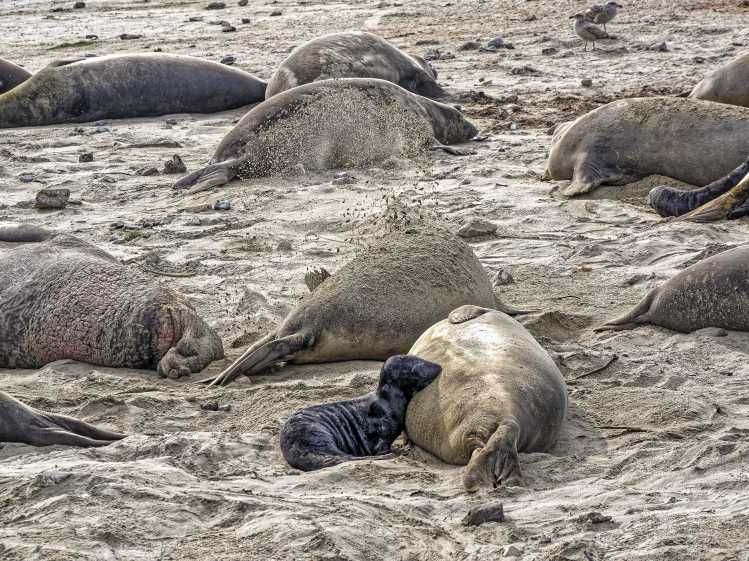
Many seal and sea lion pups can double or even quadruple their body weight by the time they wean from their mothers, often very rapidly. Northern elephant seals, for example, weigh about 75 pounds when they are born. During the nursing period, they rely entirely on their mother’s milk for nutrition and gain about 10 pounds a day. After only four weeks, the now 300-pound weaned elephant seal pups are left on their own to practice diving and finding food.
To reach these impressive milestones, pups need extremely fatty and protein-packed milk in their early development. So how much fat is in sea lion and seal milk? It depends on the species, but in general sea lion milk contains about 35 percent fat content and seal milk ranges from 40 to 60 percent fat content. Put into perspective, both human and cow milks have about 3 to 5 percent fat content.
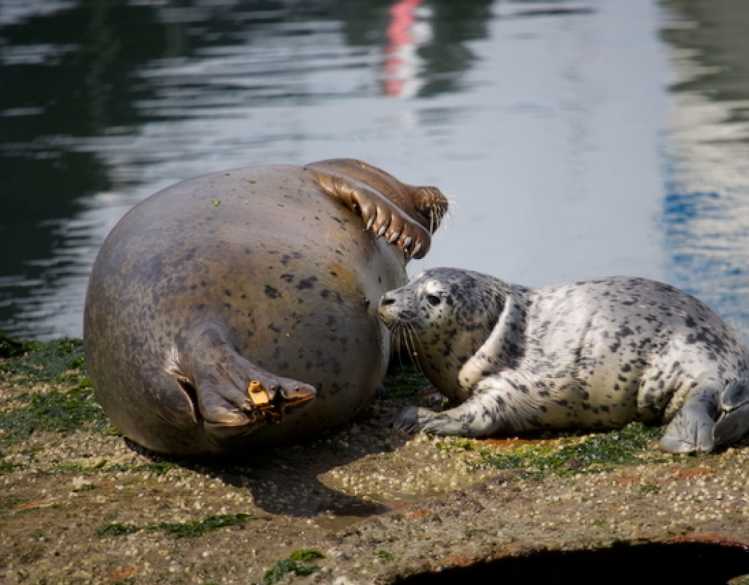
You can observe seal pups
Explore our wildlife viewing guides below to learn how you can see elephant seals and harbor seals in the wild, including pups nursing with their mothers.
Always be sure to give marine mammals at least 50 yards of space (150 feet). If an animal appears to be in distress, you can make all the difference by calling the Center's hotline at 415-289-7325 (SEAL). Our response experts are highly trained to assess the situation and rescue the animal if needed.
{"image":"\/Animals\/Wild\/Elephant seal\/cropped-images\/elephant-adult-and-pup-photo-by-joanne-lasnier-c-the-marine-mammal-center-576-142-2784-2174-1706292810.jpg","alt":"A rehabilitated elephant seal pup is in front of a mature wild elephant seal at the Chimney Rock rookery in Point Reyes, California. ","title":"When and Where to See Elephant Seals in California (and Livestream!)","link_url":"https:\/\/www.marinemammalcenter.org\/news\/when-and-where-to-see-elephant-seals-in-california-and-livestream","label":"News Update","date":"2024-01-26 01:00:00","type":"news"}
When and Where to See Elephant Seals in California (and Livestream!)
January 26, 2024
Read More{"image":"\/Animals\/Wild\/Harbor seal\/harbor-seal-banana-pose-shutterstock.jpg","alt":"","title":"Your Guide to Seeing Harbor Seal Pups in California","link_url":"https:\/\/www.marinemammalcenter.org\/news\/your-guide-to-seeing-harbor-seal-pups-in-california","label":"News Update","date":"2025-04-10 00:00:00","type":"news"}
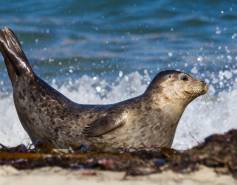
The Center gives orphaned pups life-saving care
Unfortunately, strong storms, which are linked to climate change, often sweep young pups away before they have weaned from their mothers or learned how to survive on their own. Seal pups can also be separated from their mother much too early due to people and dogs getting too close, which can scare the mother away. This results in many young, malnourished pups needing to be rescued.
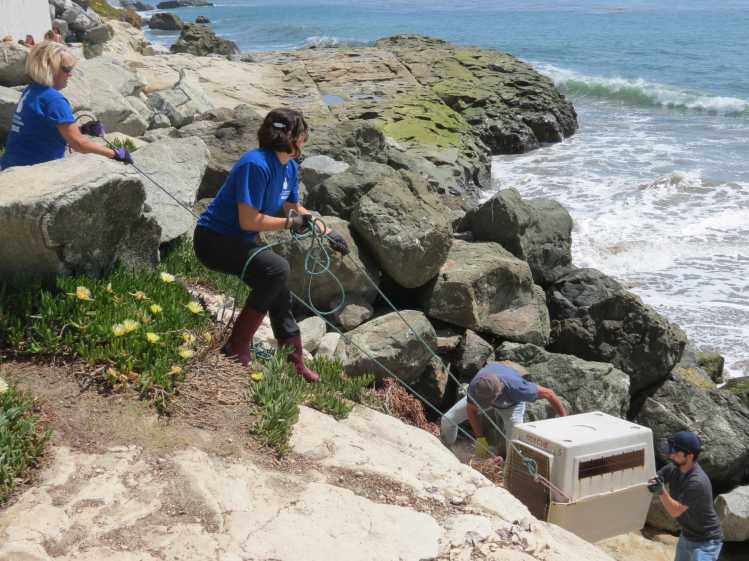
As pupping season starts along the Center’s 600-mile response range in California each spring, our hospital fills up with many orphaned and starving elephant seal and harbor seal pups. In Hawai‘i, we also care for endangered Hawaiian monk seals, many of which have weaned from their mothers too soon. It’s thanks to kind people like you that these pups can receive expert medical treatment for a second chance at life.
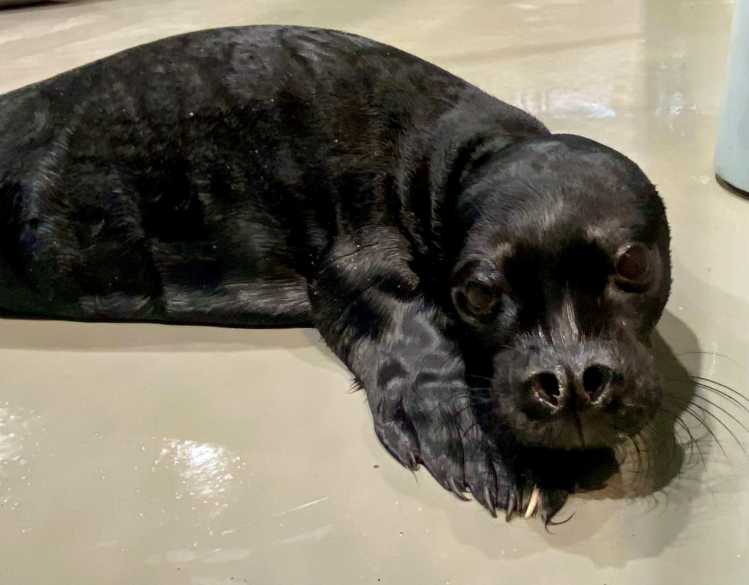
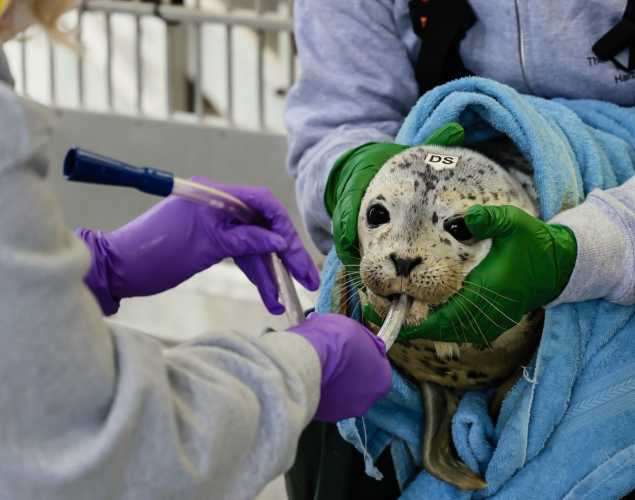
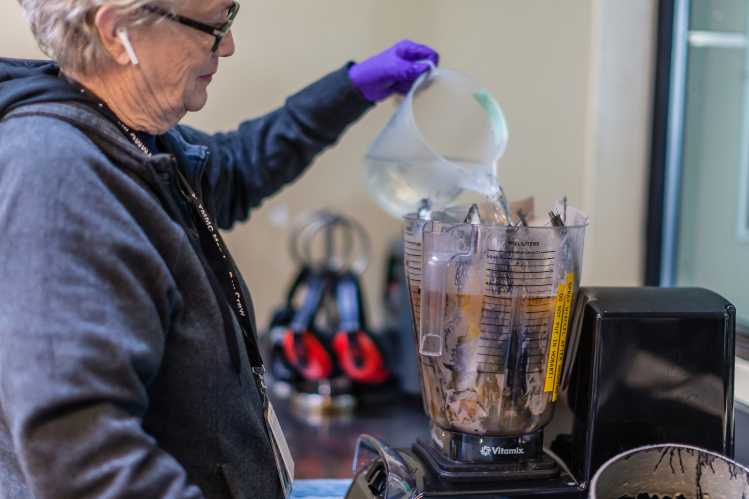
Since our youngest seal and sea lion patients would still be nursing in the wild, our animal care experts feed them a special liquid formula with a high fat and calorie content. Depending on the pup’s age, species and medical condition, patients may initially be fed a milk formula or a mixture of ground-up fish and fish oil we call a “fish smoothie.”
The Center’s veterinarians may also prescribe additional treatments, like antibiotics and vitamins, which are incorporated into the formulas. Without the antibodies from a seal mother’s milk, these treatments can help heal infections and boost fragile newborn immune systems.
Nutritional formulas are fed to our patients using a method called tube-feeding. A trained volunteer safely restrains the animal while another gently inserts a soft, flexible feeding tube down the animal's esophagus and into its stomach. A large feeding syringe is placed in the tube to deliver the formula into the animal's stomach. Many of our young patients need to be fed every few hours as growing newborns, so our animal care staff and volunteers work nearly around the clock to keep them nourished.
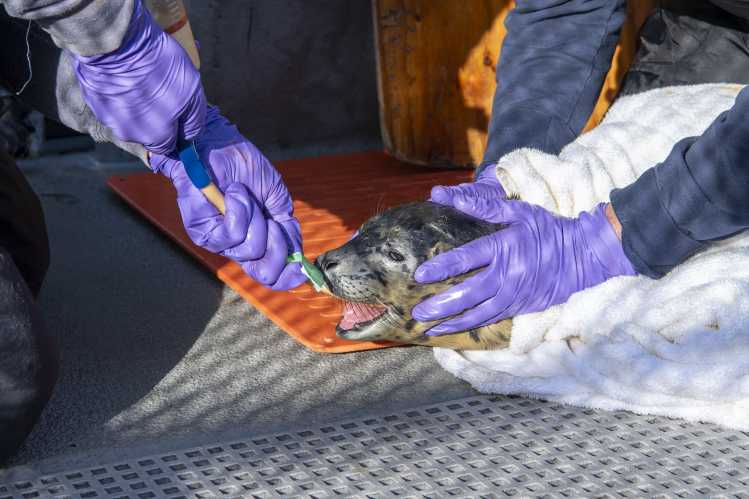
The milk from a seal mother is richer and more nutritious than anything humans can provide, so it takes much longer for rescued pups to gain enough weight to sustain themselves. Our experts conduct frequent weight checks to monitor the pups’ progress and ensure they are growing at a healthy rate. Thankfully, caring people like you ensure our pup patients have plenty of food to gain weight and a safe place to recover.
As pups at our hospital get stronger and their teeth come in, they transition from being tube-fed to eating herring. Some of our youngest patients arrive at our hospital not even knowing that fish is food! That’s why meals, medicine and lessons in fish school are often all part of a seal pup’s treatment plan.
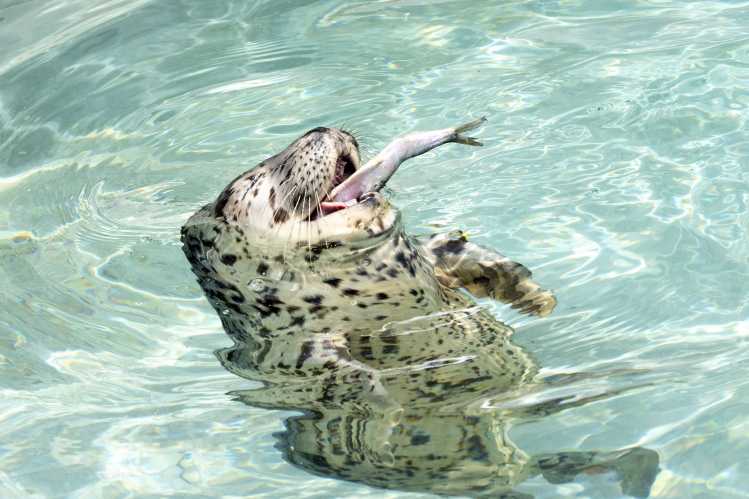
During fish school, specially trained volunteers hand feed, drag fish on a string through the water or wiggle fish with tongs to encourage a seal pup’s natural instinct to chase prey. Our pup patients learn how to track, catch and eat whole fish on their own, and finally how to compete with their pen-mates for meals.
Once the pups have gained enough weight and can show our veterinary experts they have learned the skills needed to survive in the wild, they are ready to return to their ocean home.
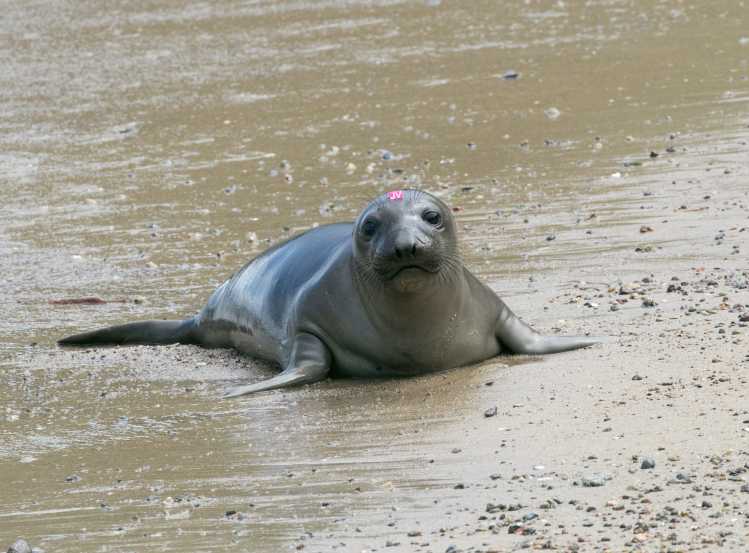
It’s all thanks to kind people like you that thousands of sick, injured and orphaned marine mammals can receive expert care for a second chance at life. And as much as our work together is about helping each individual animal to thrive, it is also about populations as a whole and the health of our ocean for generations to come.
Learn more about our work rehabilitating young pups


Give now to feed a seal pup!
You’ll be giving sick and injured animals the best possible care at the Center’s state-of-the-art hospital. With your gift today, you are giving a patient a second chance at life in the wild.
See Our Latest News
{"image":"\/Animals\/Wild\/Humpback whale\/humpback-whale-spout-by-bill-hunnewell-c-the-marine-mammal-center.jpg","alt":"Humpback whale spout","title":"A Collaboration to Protect Whales and Support California\u2019s Dungeness Crab Fishery","link_url":"https:\/\/www.marinemammalcenter.org\/news\/collaboration-to-protect-whales-and-support-californias-dungeness-crab-fishery","label":"Press Release","date":"2026-10-22 02:00:00"}
A Collaboration to Protect Whales and Support California’s Dungeness Crab Fishery
October 22, 2026
Read More{"image":"\/People\/Action\/Response\/cropped-images\/c-common-dolphin93026cuesta-inlet-in-morro-bayphoto-c-the-marine-mammal-center-noaa-mmhsrp-24359-0-399-1270-992-1790883642.jpg","alt":"Stranded dolphin response","title":"Three Common Dolphins Freed from Mudflats in Morro Bay","link_url":"https:\/\/www.marinemammalcenter.org\/news\/three-common-dolphins-freed-from-mudflats-in-morro-bay","label":"News Update","date":"2026-10-02 02:00:00"}
{"image":"\/Animals\/Wild\/Humpback whale\/cropped-images\/a-humpback-whalesf-bay91526photo-by-norely-faz-c-the-marine-mammal-center-noaa-permit-26532-772-1-1270-992-1789760973.png","alt":"Humpback whale Rio","title":"Humpback Whale \"Rio\" Spotted in the Sacramento-San Joaquin Delta","link_url":"https:\/\/www.marinemammalcenter.org\/news\/humpback-whale-rio-spotted-in-the-sacramento-san-joaquin-delta","label":"News Update","date":"2026-09-18 12:10:00"}
Humpback Whale "Rio" Spotted in the Sacramento-San Joaquin Delta
September 18, 2026
Read More{"image":"\/Animals\/Patients\/California sea lions\/2024\/d-california-sea-lionsin-treatment-for-domoic-acidsausalito72624photo-by-giancarlo-rulli-c-the-marine-mammal-center.jpg","alt":"California sea lions","title":"SF GATE: Sick, disoriented sea lions are washing up on California beaches","link_url":"https:\/\/www.marinemammalcenter.org\/news\/sf-gate-sick-disoriented-sea-lions-are-washing-up-on-california-beaches","label":"In the News","date":"2026-09-01 10:39:22"}
SF GATE: Sick, disoriented sea lions are washing up on California beaches
September 1, 2026
Read More